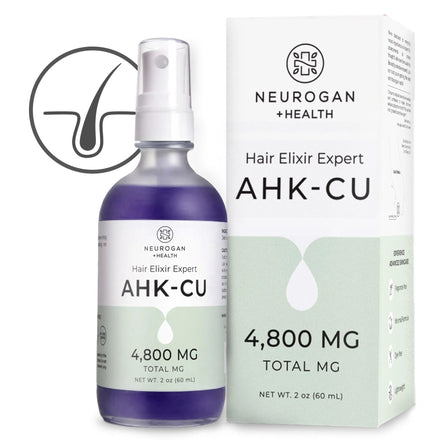
Peptides show up in almost every corner of cosmetic formulation now — skincare, wound care, and increasingly in hair loss treatments. The category is not a fad: short amino acid sequences that target specific cellular receptors have a legitimate scientific basis. But the marketing around them has outrun the evidence, and a lot of what's sold as a "peptide hair treatment" is peptides at decorative concentrations in poorly designed formulas.
This guide covers what peptides actually are, how they work in hair biology, which ones have meaningful evidence, and how to think about them relative to the proven medical treatments for hair loss.
What Are Peptides? The Basics
Peptides are short chains of amino acids — the building blocks of proteins. A "peptide" typically means 2 to 50 amino acids linked together; larger chains are proteins. The human body uses peptides as signaling molecules: growth factors, hormones, neurotransmitters, and tissue repair signals are all (or contain) peptides. Relevant to hair biology:- Copper peptides: amino acid chains chelated to copper ions (GHK-Cu, AHK-Cu)
- Signaling peptides: sequences that activate specific cellular pathways (biotinoyl Tripeptide-1, Acetyl Tetrapeptide-3)
- Carrier peptides: deliver minerals (copper, manganese) into tissue
- Neurotransmitter-inhibiting peptides: reduce muscle contraction (primarily cosmetic; less hair-relevant)
How Hair Grows: A Quick Biology Refresher
The hair follicle cycles through three phases:- Anagen (active growth): Lasts 2-7 years. The follicle is metabolically active and producing a hair shaft. Cell division in the bulb is continuous.
- Catagen (regression): 2-3 weeks. Growth stops, the lower follicle shrinks.
- Telogen (resting): ~3 months. The hair is "club hair" — retained in the follicle but not growing. Ends with shedding (exogen) and re-entry into anagen.
Treatments for hair loss generally work by:
- Extending anagen
- Shortening telogen
- Preventing follicle miniaturization (the progressive shrinking caused by DHT in androgenetic alopecia)
- Improving the cellular machinery that drives growth
How Peptides Interact with the Hair Follicle
dermal papilla cells
The dermal papilla (DP) sits at the base of the follicle and serves as its master regulator — signaling surrounding epithelial cells to proliferate, maintaining the follicle in anagen, and controlling the catagen transition.Copper peptides (particularly AHK-Cu) directly stimulate DP cell proliferation and suppress TGF-beta-1, the key DP-derived signal that triggers catagen [1].
VEGF Signaling
The follicle requires a dense capillary network to sustain active growth. VEGF (vascular endothelial growth factor) promotes angiogenesis — new blood vessel formation. AHK-Cu and GHK-Cu have both been shown to upregulate VEGF in dermal fibroblasts and follicle-associated cells.Extracellular Matrix Support
GHK-Cu upregulates collagen type 1, 3, and 4 synthesis and suppresses matrix metalloproteinases (MMPs), the enzymes that degrade collagen [2]. The follicle's surrounding matrix affects its structural integrity.Anti-Apoptotic Effects
AHK-Cu reduces programmed cell death in follicle cells. This matters particularly in androgenetic alopecia, where miniaturizing follicles show elevated apoptosis. Reducing apoptosis may slow the miniaturization process.Copper Peptides: GHK-Cu and AHK-Cu
GHK-Cu (copper tripeptide-1)
GHK-Cu (Glycyl-L-Histidyl-L-Lysine copper) is the naturally occurring form, first isolated from human plasma in 1973 [3]. It activates over 4,000 genes related to tissue repair and antioxidant protection. Plasma levels decline with age. Hair-relevant mechanisms:- collagen synthesis support
- Anti-inflammatory (reduces scalp inflammation)
- VEGF upregulation
- Wound healing acceleration (relevant to microneedling protocols)
AHK-Cu (Copper Tripeptide-3)
AHK-Cu is synthetic, differing from GHK-Cu by one amino acid at the N-terminus. This change appears to shift its affinity toward follicle tissue. Hair-relevant mechanisms:- Direct DP cell proliferation
- TGF-beta-1 suppression (extends anagen)
- Anti-apoptotic (caspase-3 and PARP reduction)
- VEGF upregulation
Other Peptides Used in Hair Products
| Peptide | Common Name | Mechanism | Evidence Level |
|---|---|---|---|
| Biotinoyl Tripeptide-1 | Procapil base | Targets follicle anchoring; reduces apoptosis | Small trials; moderate |
| Acetyl Tetrapeptide-3 | Chronostat | Regulates follicle cycling; scalp extracellular matrix | Small trials |
| Oligopeptide-41 | Growth factor analog | IGF-1 pathway; anagen promotion | Limited data |
| Sh-Polypeptide-9 | KGF-2 analog | Proliferation of follicle cells | Research stage |
Many of these appear in hair products at concentrations below what was used in available studies. The efficacy of the product depends heavily on formulation quality.
How to Evaluate a Peptide Hair Product
1. Check the INCI List
INCI (International Nomenclature Cosmetic Ingredients) is the global standard for ingredient naming. Look for:- Copper Tripeptide-1 (GHK-Cu)
- Copper Tripeptide-3 (AHK-Cu)
- Biotinoyl Tripeptide-1
If the ingredient is only named in marketing copy ("contains copper peptides") but isn't in the INCI list, the product may not contain it.
2. Ingredient List Position
Ingredients are listed in descending order of concentration. Peptides appearing in the first half of the list are at meaningful concentrations. Appearing just before water-binding fillers at the end suggests decorative amounts.3. Formula Compatibility
Copper peptides are destabilized by strongly acidic environments. A formula containing both copper peptides and high-concentration ascorbic acid (vitamin C) is either poorly formulated or one of the actives is at cosmetic-only concentrations.4. pH
Optimal pH for copper peptide stability is approximately 4-7. Many brands don't publish pH. A broad-spectrum formula with a listed pH range near neutral is a positive sign.Peptides vs. Proven Medical Hair Loss Treatments
| Treatment | Mechanism | Evidence Strength | FDA Status |
|---|---|---|---|
| Copper peptides (AHK-Cu/GHK-Cu) | DP cell stimulation, VEGF, anti-inflammatory | Small trials + cell data | Cosmetic ingredient |
| minoxidil (topical) | Vasodilation, anagen extension | Extensive RCTs | Approved (OTC) |
| finasteride | DHT reduction (5-AR inhibition) | Extensive RCTs | Approved (Rx, men) |
| Other signaling peptides | Various | Very limited | Cosmetic ingredient |
Copper peptides, properly formulated, are a genuine biological complement to first-line treatments. They're not a replacement.
Who Benefits Most from Peptide Hair Treatments
- Early thinning, before significant follicle miniaturization
- Age-related hair quality loss (separate from AGA)
- People using minoxidil or finasteride who want to address additional mechanisms
- Women who cannot use DHT-blocking medications
- Anyone who wants a non-hormonal, low-risk addition to their hair health protocol
The Realistic Picture
Peptide hair treatments, done correctly, address real mechanisms that first-line treatments don't cover. They're slow — results take months — and the evidence base is still developing relative to minoxidil or finasteride. They are not a cure for progressive androgenetic alopecia, but they are a reasonable, well-tolerated, science-based addition to a comprehensive approach.References
- Pyo, H. K., et al. (2007). The effect of tripeptide-copper complex on human hair growth in vitro. Archives of pharmacal research, 30(7), 834-839.
- Pickart, L., et al. (2012). The human tripeptide GHK-Cu in prevention of oxidative stress and degenerative conditions of aging. Oxidative medicine and cellular longevity, 2012(1), 324832.
- Pickart, L., & Thaler, M. M. (1973). Tripeptide in human serum which prolongs survival of normal liver cells and stimulates growth in neoplastic liver. Nature: New biology, 243(124), 85-87.