‘Copper Tripeptide-1 vs Copper Tripeptide-3: What’s the Difference?’ featuring blue powder effects and the AHK-Cu logo in the bottom corner.
Copper Tripeptide-1 and Copper Tripeptide-3 sound like they're basically the same thing, just numbered differently. But they're not. They're related, they share two of their three amino acids, and they both deliver copper into tissue. Beyond that, they were developed for different purposes, have different research histories, and tend to show up in different types of products.
This comes up most often when someone is shopping for a copper peptide serum and tries to figure out whether the one they're looking at is for skin, hair, or both.
The short answer is that Copper Tripeptide-1 has earned its place as a skin care ingredient over decades of research, while Copper Tripeptide-3 was specifically engineered with hair follicles in mind.
What Are Copper Tripeptide-1 and Copper Tripeptide-3?
Both are copper peptides, which means they're short chains of amino acids bonded to a copper ion. The copper ion is what makes both compounds biologically active. On its own, copper can't readily enter cells at useful concentrations. Bound to the right peptide, it can be delivered in a targeted, bioavailable way.
Copper Tripeptide-1, also called GHK-Cu, is a naturally occurring compound. The name GHK stands for the three amino acids that make up its chain: glycine, histidine, and lysine. It was first isolated from human blood plasma by biochemist Dr. Loren Pickart in 1973 and has been studied extensively ever since [1].
Its INCI name, the standardized label name used on cosmetic product ingredient lists, is Copper Tripeptide-1. You'll see it listed as GHK-Cu, copper peptide GHK, or Copper Tripeptide-1 depending on the brand.
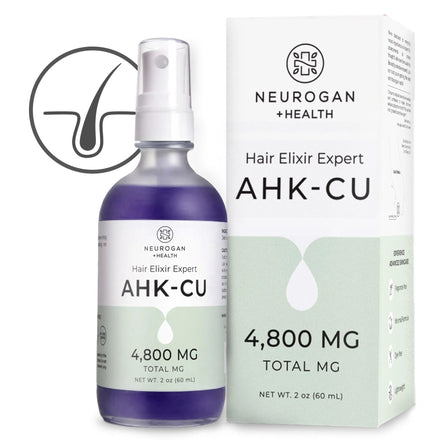
Copper Tripeptide-3, also called AHK-Cu, is synthetic. It doesn't occur naturally in the body. The name AHK stands for alanine, histidine, and lysine, the three amino acids in its chain. It was engineered to have a stronger affinity for hair follicle tissue than GHK-Cu, and was first studied in that context by researchers at Seoul National University in 2007 [2]. Its INCI name is Copper Tripeptide-3.
INCI stands for International Nomenclature of Cosmetic Ingredients — it's the standardized naming system used on ingredient labels worldwide. Knowing the INCI names means you can spot these ingredients on any label, regardless of how the product is marketed.
The Key Structural Difference: Glycine vs Alanine
Both peptides are three amino acids long. Both have histidine and lysine at positions two and three. The only difference is the first amino acid in the chain: GHK-Cu starts with glycine, and AHK-Cu starts with alanine.
That one substitution is what makes them behave differently in tissue. Think of it like two keys that are almost identical. They're the same size, they fit the same general lock type, but a small difference at the tip means one opens some doors the other doesn't.
Glycine is the smallest amino acid, and its presence in GHK-Cu gives the peptide a broad, flexible affinity for many tissue types, including skin, connective tissue, and blood vessel walls. Alanine is slightly larger and has a different chemical character, which researchers believe shifts AHK-Cu's receptor affinity more specifically toward hair follicle cells.
Both peptides coordinate with copper through the histidine at position two, which is the structural feature that makes copper delivery possible in both cases.
Histidine has a chemical side chain that forms a stable bond with copper ions, allowing the peptide to carry copper into cells without it becoming toxic or reactive in the process. That mechanism is why both copper peptides produce some overlap in effects, but the amino acid at position 1 determines where each has its strongest biological impact.
Copper Tripeptide-1 (GHK-Cu): What It Does for Skin
GHK-Cu has one of the more impressive research histories of any cosmetic ingredient. Over more than five decades of published work, it has been studied in the context of wound healing, skin aging, collagen production, anti-inflammatory signaling, and antioxidant defense. The scope of its activity is broader than most peptides, which is part of why it's become a fixture in high-end skin care.
Collagen and Elastin Synthesis
The most documented skin benefit of GHK-Cu is its effect on collagen production. Collagen is the main structural protein in skin, responsible for firmness and elasticity. As we age, collagen production slows, and existing collagen becomes less organized.
GHK-Cu has been shown in multiple studies to stimulate fibroblasts (the cells that produce collagen) to synthesize more of it, and to produce elastin as well, the protein that allows skin to snap back into place [3].
Wound Healing
GHK-Cu was originally studied for its role in tissue repair. It appears to accelerate wound healing by promoting cell migration into damaged areas, reducing inflammation, and supporting the formation of new blood vessels to supply the healing tissue [1].
That wound healing activity is now understood to be part of why it benefits aged or sun-damaged skin, which shares some biological features with tissue in a state of low-level repair.
Anti-Inflammatory and Antioxidant Activity
GHK-Cu has been shown to reduce levels of pro-inflammatory signaling molecules in tissue [4]. Chronic low-grade inflammation is one of the main drivers of skin aging, so consistently reducing it over time affects how skin looks and functions.
The copper it delivers also supports superoxide dismutase activity, the enzyme that neutralizes free radicals before they can damage skin cells.
Gene Expression
One of the more surprising findings in GHK-Cu research is its apparent effect on gene activity.
Studies have suggested it may modulate the expression of hundreds of genes involved in skin repair, antioxidant defense, and inflammation [5]. This level of influence on cellular programming is unusual for a tripeptide and is part of why researchers have continued to study it extensively.
Copper Tripeptide-3 (AHK-Cu): What It Does for Hair Growth
AHK-Cu's research is narrower than GHK-Cu's, but it's more specifically targeted at hair follicle biology. The existing studies are designed to understand exactly what happens at the follicle level when dermal papilla cells are exposed to the peptide.
Dermal Papilla Cell Stimulation
Dermal papilla cells are the specialized cells at the base of each hair follicle that regulate the hair growth cycle.
They send the growth signals that determine whether a follicle is actively producing hair or sitting dormant. AHK-Cu has been shown in laboratory research to stimulate dermal papilla cell proliferation, meaning more of these growth-controlling cells divide and become active [2]. In the same research, it also reduced markers of apoptosis (programmed cell death) in those cells, keeping them alive and functional longer.
VEGF Upregulation
AHK-Cu has also been associated with increased VEGF (vascular endothelial growth factor) production in scalp fibroblasts. VEGF promotes the formation of new blood vessels around active follicles, improving the supply of oxygen and nutrients that sustain hair growth during anagen [2]. Active follicles are metabolically demanding, and a better blood supply helps them stay in anagen longer.
Human Hair Count Data
A 2016 randomized trial in 45 men with androgenetic alopecia found that a topical complex containing 5-aminolevulinic acid and a GHK peptide increased hair counts by about 53–72 hairs per cm² over six months, compared with a much smaller change in the placebo group [6].
Quick Comparison GHK vs AHK
| Copper Tripeptide-1 (GHK-Cu) | Copper Tripeptide-3 (AHK-Cu) | |
|---|---|---|
| INCI name | Copper Tripeptide-1 | Copper Tripeptide-3 |
| Common abbreviation | GHK-Cu | AHK-Cu |
| Amino acids | Glycine-Histidine-Lysine | Alanine-Histidine-Lysine |
| Natural or synthetic | Naturally occurring in human plasma | Synthetic |
| First studied | 1973, Dr. Loren Pickart | 2007, Pyo et al., Seoul National University |
| Primary application | Skin repair, anti-aging, wound healing | Hair follicle stimulation, hair growth |
| Main cell target | Skin fibroblasts, endothelial cells | Dermal papilla cells |
| Research history | 50+ years of published studies | Small body; 2007 onwards |
| Human clinical trials | Multiple; including vs. minoxidil | Small; 45-patient randomized study (2016) |
| Hormonal effects | None | None |
| Common product formats | Facial serums, eye creams, wound gels | Scalp serums, hair peptide treatments |
Which One Should You Use?
The answer depends on what you're trying to address.
If your primary concern is skin, GHK-Cu is the well-established choice. Its research on collagen synthesis, wound healing, anti-inflammatory activity, and skin remodeling is robust by cosmetic ingredient standards. Decades of studies from multiple independent research groups support it. If you're looking for a peptide to add to a skin care routine with meaningful evidence behind it, GHK-Cu is that ingredient.
If your primary concern is hair, AHK-Cu's more targeted research base becomes the more relevant one. The Pyo 2007 cell study and the Lee 2016 human trial both focus specifically on follicle biology, dermal papilla cells, anagen extension, and hair count outcomes. GHK-Cu has been studied in hair contexts as well, but its primary research is in skin, and its hair effects are more indirect, arising from scalp repair and anti-inflammatory activity rather than direct follicle stimulation.
If you have concerns about both skin and hair, they're not competing choices.
Many scalp serums designed for hair use include both, because the mechanisms complement each other. GHK-Cu's anti-inflammatory and tissue-repair activity supports a healthy scalp environment; AHK-Cu's dermal papilla stimulation addresses the follicle directly. That combination makes more biological sense than choosing one.
The Science: How Strong Is the Research?
GHK-Cu and AHK-Cu are at very different stages of their research journeys, which matters when you're deciding how much confidence to put in marketing claims.
GHK-Cu's Research Base
GHK-Cu has over 50 years of published research behind it. That research spans wound healing, collagen synthesis, anti-inflammatory pathways, gene expression modulation, and skin aging. It's been studied in cell cultures, animal models, and human clinical trials. Multiple independent research groups have replicated findings across different contexts. That depth gives it a level of scientific credibility that's rare among cosmetic peptides.
It's still a cosmetic ingredient, not a drug, which means the regulatory bar for evidence is lower than for pharmaceutical approval. But within the cosmetic-ingredient world, GHK-Cu is among the better-supported actives.
AHK-Cu's Research Base
AHK-Cu's research is younger and smaller. The Pyo 2007 study is the foundation, providing specific, statistically significant data on follicle elongation, dermal papilla cell proliferation, and three apoptosis markers in human follicle cultures. The Lee 2016 randomized study adds human hair count data from a 45-person trial. US Patent US5538945A provides intellectual history but not clinical evidence.
The existing research is targeted and well-designed. The data points from Pyo 2007 (42.7% reduction in caspase-3, 77.5% reduction in PARP, and statistically significant follicle elongation at p < 0.001) are specific and worth noting. But the total body of evidence is small, and the large independent randomized controlled trial that would cement AHK-Cu's clinical status hasn't been done yet.
Our honest assessment? GHK-Cu has a stronger research history by a wide margin. AHK-Cu has the most targeted hair growth evidence. Neither should be described as having the level of clinical proof that comes with a drug approval, but both have enough credible science behind them to take seriously.
Can You Use Both Together?
Yes, and there's a reasonable case for doing so.
The two peptides target different things. GHK-Cu works broadly across the scalp environment: reducing inflammation, supporting collagen in the dermis, and protecting cells from oxidative stress. AHK-Cu works more specifically at the follicle itself: stimulating dermal papilla cells, delaying the stop-growing signal, and supporting the blood supply around active follicles.
A healthy scalp is the environment in which follicles grow, and GHK-Cu supports that environment. AHK-Cu then works on the follicle within that environment. Using both is like keeping the soil fertile while also tending the plant directly.
Most well-formulated copper peptide scalp serums that include both will have them in a combined formula. If you're building your own layered routine, there's no known interaction issue between the two, and they can be applied in the same product or in the same routine step without concern.
One thing to keep in mind for both: copper peptides are sensitive to pH. They can degrade when mixed with strongly acidic ingredients like vitamin C (ascorbic acid) or high-concentration AHAs. If your routine includes those ingredients, use copper peptides in a separate step, ideally at a different time of day.
References
- Pickart, L., Vasquez-Soltero, J. M., & Margolina, A. (2015). GHK peptide as a natural modulator of multiple cellular pathways in skin regeneration. BioMed Research International, 2015(1), 648108.
- Pyo, H. K., Yoo, H. G., Won, C. H., Lee, S. H., Kang, Y. J., Eun, H. C., Cho, K. H., & Kim, K. H. (2007). The effect of tripeptide-copper complex on human hair growth in vitro. Archives of Pharmacal Research, 30(7), 834–839.
- Badenhorst, T., Svirskis, D., Merrilees, M., Bolke, L., & Wu, Z. (2016). Effects of GHK-Cu on MMP and TIMP expression, collagen and elastin production, and facial wrinkle parameters. Journal of Aging Science, 4, 166.
- Park, J. R., Lee, H., Kim, S. I., & Yang, S. R. (2016). The tri-peptide GHK-Cu complex ameliorates lipopolysaccharide-induced acute lung injury in mice. Oncotarget, 7(36), 58405.
- Pickart, L., & Margolina, A. (2018). Regenerative and protective actions of the GHK-Cu peptide in the light of the new gene data. International Journal of Molecular Sciences, 19(7), 1987.
- Lee, W. J., Sim, H. B., Jang, Y. H., Lee, S. J., Kim, D. W., & Yim, S. H. (2016). Efficacy of a complex of 5-aminolevulinic acid and glycyl-histidyl-lysine peptide on hair growth. Annals of Dermatology, 28(4), 438–443.