Graphic titled “Copper Peptides for Alopecia: Types, Evidence, and Expectations” showing a person with visible hair thinning at the hairline, a magnified illustration of hair follicles, and the AHK~Cu logo at the bottom.
'Alopecia' is a broad term. It covers pattern hair loss driven by hormones, patchy loss caused by autoimmune attack, diffuse shedding triggered by stress or illness, and several other distinct conditions. The treatments that work for one type often don't translate to another, which is why learning what copper peptides actually do, and which types of alopecia they're relevant to, is important before deciding whether they belong in your routine.
Copper peptides can potentially address multiple types of alopecia through their regenerative and anti-inflammatory mechanisms. But they're not equally relevant to all of them, and in at least one major category, alopecia areata, they're not the appropriate primary intervention. This article covers the evidence honestly, type by type.
what are copper peptides? (GHK-Cu and AHK-Cu Explained)
Copper peptides are short chains of amino acids bonded to a copper ion. The two most relevant to hair are GHK-Cu and AHK-Cu.
GHK-Cu (glycyl-L-histidyl-L-lysine copper, also called copper tripeptide-1) is a naturally occurring tripeptide-copper complex first isolated from human plasma in 1973 by Dr. Loren Pickart [1].
It has a 50-plus-year research history spanning skin repair, wound healing, collagen synthesis, anti-inflammatory activity, and some hair-related findings. GHK-Cu stimulates collagen synthesis in the scalp, strengthening the extracellular matrix that anchors hair follicles. It also has documented anti-inflammatory effects relevant to several types of hair loss, where chronic inflammation around follicles is a contributing factor.
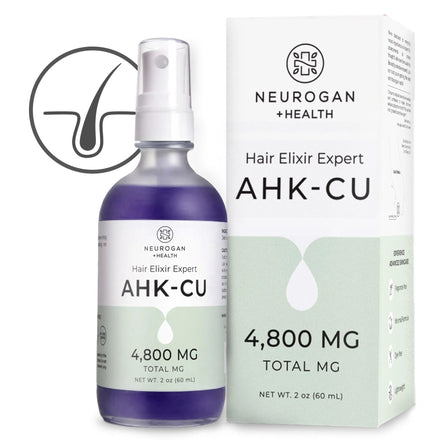
AHK-Cu (alanyl-L-histidyl-L-lysine copper, also called Copper Tripeptide-3) is a related copper peptide analog researched for hair follicle proliferation. It differs from GHK-Cu by a single amino acid at position one, a substitution that shifts its receptor affinity more specifically toward hair follicle tissue. First studied for hair growth in 2007 at Seoul National University, its research base is smaller than GHK-Cu's but more directly targeted at follicle biology [2].
Both peptides deliver bioavailable copper to scalp tissue, which is a required cofactor for lysyl oxidase (collagen cross-linking), superoxide dismutase (antioxidant defense), and other enzymes involved in tissue repair and maintenance.
Types of Alopecia Copper Peptides May Address
Copper peptides don’t work the same way for every kind of hair loss. Their strengths are tied to how much living follicle tissue is left to support and what’s driving the shedding underneath.
Androgenetic Alopecia (AGA)
Androgenetic alopecia is a hereditary, hormone-driven pattern of hair loss caused by DHT sensitivity in hair follicles. DHT (dihydrotestosterone) drives the progressive shrinking of hair follicles, causing hair to become thinner and shorter over successive cycles until the follicle becomes dormant. This is the most common form of hair loss, affecting roughly 50 percent of men and 30 percent of women by middle age [3].
Copper peptides are most relevant for androgenetic (pattern) hair loss, but they are not a stand‑alone treatment or cure for it.
Lab work shows they can stimulate dermal papilla cells, protect follicle cells from programmed cell death, and support antioxidant defenses in the scalp, which may help counter some of the cellular damage that accumulates as AGA progresses. They’re most likely to help when follicles are still producing hair, just thinner and weaker, rather than after severe miniaturization or long‑dormant loss [2].
In this area, copper peptides have better data than most “cosmetic” actives: a 2007 study found AHK‑Cu promoted human hair‑follicle growth and dermal papilla cell proliferation in cultured follicles, and a 2016 randomized trial of a GHK‑based topical in men with AGA reported roughly 52–72 additional hairs per cm² after six months in the active groups [4].
telogen effluvium (TE)
Telogen effluvium (TE) is a temporary, diffuse shedding that occurs after a stressor such as illness, surgery, major stress, hormonal shifts, or certain medications.
It doesn’t involve DHT‑driven miniaturization like androgenetic alopecia. Instead, a trigger pushes many follicles out of the growth phase (anagen) and into the resting phase (telogen) at once, so shedding typically appears about 2–3 months after the event and then gradually improves as the cycle resets [5].
Copper peptides haven’t been studied in large TE‑specific trials, but their known actions — reducing inflammation, supporting blood‑vessel growth, and protecting follicle cells — make them a reasonable supportive add‑on while the underlying trigger is addressed [6].
Most cases of telogen effluvium resolve on their own once the cause is removed, and copper peptides may help the scalp environment recover more smoothly, but they’re unlikely to be the main driver of regrowth.
Alopecia Areata (AA)
Alopecia areata is an autoimmune disease in which the immune system attacks hair follicles, causing patchy hair loss even though the follicles can still produce hair.
Copper peptides don’t address this immune attack, so they are not a primary treatment. AA usually requires immunosuppressive or immunomodulating therapies, such as corticosteroids or JAK inhibitors, prescribed by a dermatologist.
Age-Related Diffuse Thinning
Not all thinning is caused by DHT or a single “event.” As we age, scalp collagen, blood flow, and repair capacity gradually decline, weakening follicles and contributing to diffuse, age‑related thinning.
The plasma level of the natural peptide GHK (which forms GHK‑Cu) averages about 200 ng/mL at age 20 and falls to around 80 ng/mL by age 60, tracking with reduced tissue repair and collagen support in older skin [7].
For this kind of slow, age‑related thinning, copper peptides are among the more mechanistically grounded topical options: GHK‑Cu and AHK‑Cu both support collagen and the extracellular matrix, provide antioxidant and anti‑inflammatory effects, promote VEGF‑linked microcirculation, and stimulate follicle‑regulating cells in lab models.
How Copper Peptides Promote Hair Growth (Mechanisms of Action)
Copper peptides extend the active growth phase of the hair cycle, allowing follicles more time to produce longer, thicker hair. This happens through several interconnected pathways.
Dermal Papilla Cell Stimulation
dermal papilla cells sit at the base of each hair follicle and act as specialized fibroblasts that help control hair growth and the hair cycle.
In the 2007 Pyo study, AHK‑Cu made these cells divide more and showed fewer signs of programmed cell death. The researchers observed a strong, statistically significant increase in dermal papilla cell growth, along with a higher Bcl‑2/Bax survival ratio and clear reductions in two death‑related proteins, caspase‑3 and PARP, in treated cultures [2].
Together, these suggest that AHK‑Cu helps maintain a larger, healthier pool of dermal papilla cells, thereby driving follicle activity.
Collagen and Extracellular Matrix Support
GHK‑Cu has been shown in cell and tissue studies to stimulate fibroblasts to make more collagen, including types I and III. It also supports enzymes such as lysyl oxidase, which cross‑link collagen fibers and help build a stronger, more stable extracellular matrix [8].
This matters for hair because follicles sit anchored in that collagen‑rich dermal matrix — when the surrounding collagen network breaks down, the support around follicles weakens, and the scalp tissue becomes more disorganized, changes that are linked to follicle decline and thinning over time.
Angiogenesis via VEGF
VEGF (vascular endothelial growth factor) is a protein that helps the body form new blood vessels, improving blood and nutrient delivery to tissues. Hair follicles in the anagen (growth) phase have high energy needs, and studies show that more VEGF around a follicle is linked to more perifollicular vessels, bigger follicles, and thicker hairs.
Copper peptides such as GHK‑Cu have been shown in fibroblast studies to increase VEGF production and other pro‑angiogenic growth factors, thereby supporting new capillary formation in the skin. That’s one reason they’re thought to help “feed” follicles and potentially support longer growth phases, especially when combined with techniques like microneedling that also trigger a VEGF‑rich wound‑healing response in the scalp [9].
Anti-Inflammatory Activity
GHK‑Cu has been shown in cell and animal models to lower key inflammatory signals, including TNF‑alpha and other pro‑inflammatory cytokines such as IL‑6. These anti‑inflammatory actions are one way GHK‑Cu helps protect and repair tissues under stress [8].
Around hair follicles, chronic low‑grade inflammation and perifollicular fibrosis are increasingly recognized as contributors to miniaturization in androgenetic alopecia and to poor regrowth after shedding events.
By dialing down this background inflammatory activity, GHK‑Cu may help create a healthier scalp environment that better supports normal follicle cycling [7].
Oxidative Stress Reduction
Oxidative stress in the scalp refers to excess free radicals that damage follicle cells and can worsen androgen‑driven hair loss. Antioxidant defenses like superoxide dismutase (SOD) are key for neutralizing these reactive molecules and protecting follicle structure and cycling.
Copper‑binding peptides like GHK‑Cu and related complexes can act as antioxidants or SOD mimetics in skin models, helping to reduce oxidative damage in local tissues.
Lowering this oxidative burden in the scalp could indirectly reduce stress on androgen‑sensitive follicles and limit redox‑driven amplification of androgen pathways, even though it does not block hormones or 5‑alpha reductase in the same way as systemic drugs.
clinical evidence for Copper Peptides in Hair Loss Treatment
Clinical evidence for copper peptides in hair loss is still early but includes both laboratory work on human follicles and small randomized trials in people with androgenetic alopecia.
AHK-Cu Evidence
Researchers took 240 human hair follicles and kept them alive in a lab dish for 12 days. When they added the AHK‑Cu copper peptide, the hairs grew longer, and the key support cells at the base of the follicle (dermal papilla cells) multiplied more [2].
The peptide also shifted cell signals away from cell death, lowering important “self‑destruct” markers like caspase‑3 and PARP, even though the overall drop in dying cells was small. This is the main lab study showing how AHK‑Cu can directly help hair follicles, but it was done on follicles outside the body, not in real patients.
In another small study of 45 people with pattern hair loss, participants were randomly assigned to use a copper‑peptide–based treatment or a comparison product.
Over six months, the copper‑peptide group gained roughly 50–70 more hairs per square centimeter compared with their starting point, while the control group improved less [4]. This suggests copper peptides can help hair grow in real patients, but the trial was small and done at a single clinic, so larger studies are still needed to be sure.
.GHK-Cu Evidence
A small clinical study in people with hair loss found that a topical product containing GHK‑Cu could increase hair follicle size and density, with results in the same general range as low‑strength minoxidil, and with fewer scalp side effects reported by users [10].
However, human trials of copper peptides for hair are still few, often use combination treatments, and are too small to say they consistently match minoxidil on their own.
Pickart and Margolina (2018) used large gene‑expression databases to examine how GHK‑Cu affects human cells and found that it can alter the activity of more than 4,000 genes involved in tissue repair, anti‑inflammatory pathways, and antioxidant defenses [8].
This helps explain why GHK‑Cu seems to have broad healing and protective effects, but it is lab and computational work, not a direct clinical trial for hair growth.
Honest Evidence Assessment
The clinical evidence base for copper peptides in alopecia is smaller and earlier-stage than that for minoxidil or finasteride.
The evidence is sound, and the available human data is real. The gap is in scale and independent replication. Copper peptides are a credible, non-hormonal approach with a growing evidence base — but not a proven equivalent to pharmaceutical treatments.
GHK-Cu vs AHK-Cu: Comparing the Two Main Copper Peptides
|
Compound |
GHK-Cu (Copper Tripeptide-1) |
AHK-Cu (Copper Tripeptide-3) |
|
Origin |
Natural, found in human plasma |
Synthetic, engineered for hair follicle affinity |
|
Best evidence for |
Skin repair, collagen, anti-inflammatory, scalp environment |
Direct follicle cell stimulation, anagen extension, hair count outcomes |
|
Alopecia relevance |
Supports scalp environment in all types, particularly useful for inflammation-driven TE and age-related thinning |
Most targeted for AGA, DPC stimulation specific to the follicle miniaturization process |
|
Research depth |
50+ years, broad across tissue types |
Smaller, specifically hair-focused |
|
Collagen support |
Well-documented, stimulates types I and III |
Indirect, via copper delivery to fibroblasts |
|
Anti-inflammatory |
Well-documented for GHK-Cu |
Contributes via SOD upregulation and anti-apoptotic effects |
|
Best used together? |
Yes, complementary mechanisms |
Yes, covers different aspects of the same problem |
How to Use Copper Peptides for Alopecia (Formulations and Application)
Leave-on scalp serums or sprays are the best primary format. Rinse-off products (shampoos, conditioners) don't provide enough contact time with the scalp to affect the follicles.
Apply to a clean, dry scalp once or twice daily — scalp buildup can really interfere with saturation. Part hair into sections over the affected areas. Apply serum directly to the scalp, not to hair shafts. Two to four drops or sprays per section. Massage with fingertips for 30 to 60 seconds per section. Leave on.
Microneedling (0.5 mm for home use) applied before copper peptide serum significantly improves penetration by creating temporary micro-channels through the outer skin barrier.
For alopecia affecting the scalp, weekly microneedling sessions with AHK-Cu applied immediately afterward could help improve dermal-level delivery.
Copper Peptides vs Minoxidil: How Do They Compare?
|
Factor |
Copper Peptides (GHK-Cu + AHK-Cu) |
Minoxidil |
|
Mechanism |
DPC stimulation, collagen support, VEGF (angiogenesis), anti-inflammatory, antioxidant, anti-apoptotic |
Vasodilation, anagen extension via potassium channel activity |
|
FDA approval |
No (cosmetic ingredients) |
Yes (2% for women; 2% and 5% for men) |
|
Evidence depth |
Early stage, small trials, promising cell data |
Decades of large RCTs, well-established |
|
DHT relationship |
Indirect, via oxidative stress reduction |
None, does not block DHT |
|
Side effects |
Minimal at topical doses |
Initial shedding phase, scalp irritation, rare systemic effects |
|
Appropriate for women? |
No contraindications |
2% FDA-approved, 5% off-label |
|
Needs continuous use? |
Benefits diminish if stopped, gradual rather than sharp reversal |
Hair loss returns within months of stopping |
|
Used together? |
Yes, recommended for broader coverage |
Yes, complementary mechanisms |
Copper peptides and minoxidil work really well, and their mechanisms are complementary.
Minoxidil handles vasodilation and anagen extension, while copper peptides handle follicle cell health, new vessel formation via VEGF, and collagen/matrix support. That being said, minoxidil has more research behind it and is the only FDA-approved topical for androgenic alopecia.
Realistic Expectations: Timeline and Results
|
Alopecia Type |
What to Expect from Copper Peptides |
Realistic Timeline |
|
Androgenetic alopecia (AGA) |
Slowed progression, modest density improvement, complementary to minoxidil and finasteride |
4–6 months for visible changes, 6+ for full assessment |
|
Telogen effluvium (TE) |
Reduced shedding duration, faster follicle reactivation in the recovery phase |
4–8 weeks for shedding reduction, 2–3 months for new growth |
|
Age-related thinning |
Maintained scalp quality, improved collagen density, and modest follicle support |
3–6 months for texture/quality improvement, longer for density |
|
Alopecia areata (AA) |
Not the appropriate primary treatment, marginal anti-inflammatory support only |
Work with a dermatologist, copper peptides are supplementary at best |
Hair cycling is slow regardless of treatment. Six months of consistent daily application is the minimum meaningful evaluation window for any follicle-targeting intervention. The Lee 2016 trial measured outcomes at 6 months — that timeline is grounded in the biology of hair [4].
Combining Copper Peptides with Other Hair Loss Treatments
Copper peptides fit cleanly into a stacked protocol because they address biological dimensions that other treatments don't.
|
Treatment |
What It Adds |
Compatible with Copper Peptides? |
|
Minoxidil |
Vasodilation, anagen extension via potassium channels |
Yes, apply in separate steps with a brief gap |
|
Finasteride / Dutasteride |
Systemic DHT reduction slows the hormonal driver of AGA |
Yes, no interaction. Oral, so no topical conflict |
|
Scalp microneedling |
Wound response VEGF, penetration enhancement for topical actives |
Yes, apply copper peptides immediately after the needling session |
|
PRP therapy |
Growth factor burst (PDGF, IGF-1, VEGF) to scalp dermis |
Yes, copper peptides daily between clinical PRP sessions |
|
LLLT |
Photobiomodulation: mitochondrial stimulation in follicle cells |
Yes, no conflict, independent mechanism |
|
Saw palmetto |
Partial 5-alpha reductase inhibition, mild DHT reduction |
Yes, a non-prescription stack covering hormonal and cellular sides |
For androgenetic alopecia specifically, the most evidence-supported complete approach is: finasteride (prescription, primarily men) or minoxidil (OTC) as the pharmaceutical foundation, copper peptides as the daily cellular support layer, and scalp microneedling to amplify topical penetration.
Each layer covers something the others don't. Copper peptides don't replace any element of that stack — they complete it.
References
-
Pickart, L., Vasquez-Soltero, J. M., & Margolina, A. (2012). The human tripeptide GHK‐Cu in prevention of oxidative stress and degenerative conditions of aging: implications for cognitive health. Oxidative medicine and cellular longevity, 2012(1), 324832.
-
Pyo, H. K., Yoo, H. G., Won, C. H., Lee, S. H., Kang, Y. J., Eun, H. C., Cho, K. H., & Kim, K. H. (2007). The effect of tripeptide-copper complex on human hair growth in vitro. Archives of Pharmacal Research, 30(7), 834–839.
-
Ho, C. H., Sood, T., & Zito, P. M. (2024). Androgenetic alopecia. In StatPearls [Internet]. StatPearls Publishing.
-
Lee, W. J., Sim, H. B., Jang, Y. H., Lee, S. J., Kim, D. W., & Yim, S. H. (2016). Efficacy of a complex of 5-aminolevulinic acid and glycyl-histidyl-lysine peptide on hair growth. Annals of dermatology, 28(4), 438-443.
-
Asghar, F., Shamim, N., Farooque, U., Sheikh, H., & Aqeel, R. (2020). Telogen effluvium: a review of the literature. Cureus, 12(5), e8320.
-
Yano, K., Brown, L. F., & Detmar, M. (2001). Control of hair growth and follicle size by VEGF-mediated angiogenesis. The Journal of clinical investigation, 107(4), 409-417.
-
Dou, Y., Lee, A., Zhu, L., Morton, J., & Ladiges, W. (2020). The potential of GHK as an anti-aging peptide. Aging pathobiology and therapeutics, 2(1), 58.
-
Pickart, L., & Margolina, A. (2018). Regenerative and protective actions of the GHK-Cu peptide in the light of the new gene data. International journal of molecular sciences, 19(7), 1987.
-
Sarbaziha, R., & Goldberg, D. J. (2026). Copper Peptides in Regenerative Aesthetic Dermatology. Dermatological Reviews, 7(2), e70067.
-
Kuceki, G., Coppinger, A. J., Ragi, S. D., Johnson, L. S., Goren, A., Kalil, L. L., ... & Wambier, C. G. (2025). Enhanced hair regrowth with five monthly sessions of minoxidil-dutasteride-copper peptides tattooing for androgenetic alopecia assessed by artificial intelligence and blinded evaluators. JAAD international, 20, 38-40.