Graphic titled ‘How Copper Peptides Reduce Scalp Inflammation for Healthier Hair’ showing a close-up of a scalp with a magnified inflamed area and the AHK-Cu logo in the bottom corner.
Scalp inflammation is one of the less glamorous topics in hair health, but it might be one of the most important. Most people don't even know they have it. There's no rash, no obvious redness, no clear signal that something is wrong. But it gradually wears down the environment that hair follicles depend on.
Chronic low-grade inflammation around the follicle disrupts the hair growth cycle, damages the tissue structure the follicle sits in, and contributes to the kind of thinning that builds up slowly over the years. Addressing it is important, not just as a cosmetic goal but as a foundational piece of scalp health.
Copper peptides, particularly GHK-Cu (glycyl-L-histidyl-L-lysine copper), a naturally occurring tripeptide-copper complex first found in human plasma, have a documented anti-inflammatory profile that makes them relevant here. This article covers what scalp inflammation actually is, how it damages follicles, and the specific ways copper peptides appear to address it.
what are copper peptides and How Do They Work?
A copper peptide is a short chain of amino acids bonded to a copper ion. The peptide acts as a stabilizer and delivery vehicle, bringing copper into tissue in a bioavailable form that cells can actually use.
GHK-Cu is the best studied of the copper peptides. It's composed of three amino acids, glycine, histidine, and lysine, bound to a copper(II) ion, and it occurs naturally in human blood plasma, saliva, and urine. It was first isolated by Dr. Loren Pickart in 1973 and has been studied across a wide range of tissue repair, anti-aging, and anti-inflammatory contexts in the decades since [1].
The copper ion is central to most of GHK-Cu's biological activity. Copper is a required mineral for several important enzymes, including lysyl oxidase, which builds and cross-links collagen and elastin, and superoxide dismutase (SOD), which neutralizes free radicals. By delivering bioavailable copper into skin and scalp tissue, GHK-Cu supports both the structural repair side and the antioxidant defense side of follicle health.
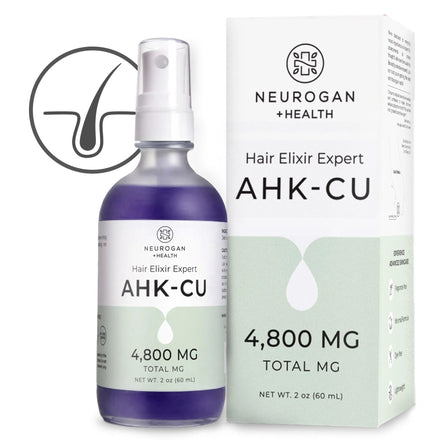
AHK-Cu (Copper Tripeptide-3) is a synthetic variant with a stronger affinity for hair follicle cells specifically. Both copper peptides are relevant to scalp inflammation, but GHK-Cu's anti-inflammatory research base is deeper and more directly documented, so it features prominently here alongside AHK-Cu's follicle-targeted mechanisms.
Understanding Scalp Inflammation and Its Impact on Hair Health
Inflammation is the body's standard response to damage or threat. It's a useful process in short bursts: it sends immune resources to an area, triggers repair, and then resolves. The problem is when it doesn't resolve and instead becomes chronic.
Chronic scalp inflammation, sometimes called microinflammation because it operates below the threshold of obvious symptoms, is a low-level, ongoing immune response around the hair follicle. It's associated with several forms of hair loss, including androgenetic alopecia (pattern hair loss) and conditions like seborrheic dermatitis and scalp psoriasis [2]. Even in people without a diagnosed scalp condition, environmental factors such as pollution, UV exposure, and harsh product use can contribute to a chronic, low-grade inflammatory state.
How Inflammation Damages Hair Follicles
When inflammation persists around a hair follicle, a few things happen.
Pro-inflammatory signaling molecules called cytokines accumulate in the tissue. These cytokines disrupt the normal signaling between dermal papilla cells (the specialized cells at the base of each hair follicle that control hair growth and cycling) and the rest of the follicle. When dermal papilla cell communication is disrupted, the follicle's growth cycle shortens. It spends less time in anagen (the active growth phase) and more time in telogen (the resting phase).
At the same time, inflammation generates additional free radicals, thereby increasing oxidative stress in the follicular environment.
Oxidative stress damages follicle cell membranes and DNA and, as covered in our other articles, also upregulates the enzyme that converts testosterone into DHT locally, adding a hormonal dimension to an already compromised follicle.
The scalp microbiome, the diverse community of bacteria, fungi, and other microorganisms living on the scalp, also plays a role here. An inflamed scalp tends to have a disrupted microbiome, with certain species, such as Malassezia yeast, overgrowing and further triggering inflammatory responses [3].
The consequence is a self-reinforcing cycle: inflammation disrupts the microbiome, the disrupted microbiome worsens inflammation, and the follicles caught in the middle suffer.
Over time, sustained microinflammation can cause a process called perifollicular fibrosis, where scar-like tissue forms around the follicle, physically constricting it and reducing its ability to produce a normal hair strand. This is one of the more difficult forms of follicle damage to reverse.
How Copper Peptides Reduce Scalp Inflammation
GHK-Cu's anti-inflammatory activity has been observed across multiple cell types and tissue contexts. Specifically in the scalp, the mechanisms that matter most are cytokine modulation and free radical neutralization.
Reducing Pro-Inflammatory Cytokines
Research has shown that GHK-Cu modulates a broad range of genes involved in inflammatory signaling [1]. This means GHK-Cu appears to reduce the production of pro-inflammatory cytokines, the molecular messengers that keep inflammation going, while supporting anti-inflammatory responses.
Fewer pro-inflammatory signals around the follicle means less disruption to dermal papilla cell activity and a more stable environment for the hair growth cycle to run its course.
TNF-alpha and interleukin-1 (IL-1) are two of the cytokines most associated with follicle inflammation in androgenetic alopecia [4].
Studies have shown that GHK-Cu reduces TNF-alpha expression in tissue, which is relevant not only as an anti-inflammatory marker but also because TNF-alpha has been directly linked to the early induction of the catagen (regression) phase in hair follicles [5].
Neutralizing Free Radicals via SOD
The antioxidant side of copper peptide activity works through superoxide dismutase, the enzyme that converts superoxide free radicals into harmless byproducts [6].
SOD requires copper as a cofactor to function, and GHK-Cu's copper delivery supports SOD activity in the cells around and within the follicle [7]. Fewer free radicals means less oxidative stress, which means less inflammatory signal being generated and less upregulation of DHT-producing enzymes in the follicle tissue.
AHK-Cu contributes here as well. Research has associated AHK-Cu with SOD upregulation in scalp fibroblasts, and its anti-apoptotic effects on dermal papilla cells may also reduce the inflammatory signals released by damaged or dying cells [8].
When cells die in an uncontrolled way (necrosis rather than orderly apoptosis), they release their contents into surrounding tissue, triggering additional immune responses. By keeping dermal papilla cells alive and functional, AHK-Cu may reduce this secondary inflammatory trigger.
The Role of Collagen and Elastin in Scalp Recovery
Collagen and elastin are the main proteins that make up the extracellular matrix, the mesh of structural proteins that surrounds and supports every cell in the skin. When inflammation is sustained, enzymes called matrix metalloproteinases (MMPs) become more active, breaking down the matrix faster than the body can replace it.
GHK-Cu is one of the better-documented stimulators of collagen synthesis available as a cosmetic ingredient. Studies have shown that it activates fibroblasts, the cells responsible for producing collagen, to increase output. It also stimulates elastin production and has been shown to inhibit certain MMPs, slowing the rate at which the existing matrix is broken down [1].
For hair follicles, this is vital because follicles are anchored in the dermis by the surrounding matrix. A healthy, well-structured matrix keeps the follicle seated properly and provides the mechanical support for normal cycling. A degraded matrix, the result of chronic inflammation and MMP activity, is associated with follicle displacement, weakened anchoring, and the perifollicular fibrosis mentioned earlier.
By stimulating collagen and elastin production while reducing the inflammatory conditions that degrade them, copper peptides work on both sides of the scalp tissue health equation.
How Copper Peptides Stimulate Hair Follicle Growth Through Angiogenesis
Angiogenesis is the process of forming new blood vessels from existing ones. It's triggered by signaling proteins, most notably VEGF (vascular endothelial growth factor), when tissue needs more blood supply than its current capillary network can provide.
Active hair follicles during anagen are among the most blood-hungry structures in the scalp. Matrix cells dividing rapidly to build a hair strand need a constant supply of oxygen and nutrients. The network of tiny capillaries surrounding each follicle, called the perifollicular vascular network, expands during anagen to meet that demand and contracts during telogen when the follicle is resting.
Chronic scalp inflammation damages this capillary network. Inflamed tissue compresses vessels, reduces their responsiveness to growth signals, and, over time, contributes to reduced blood flow in affected areas. Less blood means less oxygen and fewer nutrients reaching the follicle, which shortens anagen and produces thinner strands.
Both GHK-Cu and AHK-Cu have been associated with VEGF upregulation in scalp fibroblasts, supporting the formation of new capillaries around active follicles.
A landmark 2001 study by Yano et al. in the Journal of Clinical Investigation demonstrated that VEGF overexpression in mouse follicle cells produced significantly larger follicles and faster hair growth, establishing a direct link between VEGF-driven angiogenesis and hair growth outcomes [9]. By calming the inflammatory environment that damages existing vessels and simultaneously signaling the formation of new ones, copper peptides address the vascular side of follicle health from both directions.
Copper Peptides and the Hair Growth Cycle: Extending Anagen
Every hair follicle cycles independently through anagen (active growth, lasting two to seven years in a healthy follicle), catagen (a brief two-to-three-week transition), and telogen (a roughly three-month resting phase before shedding). On a healthy scalp, around 85 to 90 percent of follicles are in anagen at any given time.
Scalp inflammation disrupts that ratio.
TNF-alpha, the pro-inflammatory cytokine mentioned earlier, has been shown to directly induce premature catagen entry in follicles. When inflamed follicles exit anagen early, more of them are in telogen simultaneously, leading to increased shedding and reduced density. Repeated early exits from anagen shorten the average strand length and thickness because the follicle has less time in growth mode each cycle.
Researchers have mostly tested these copper peptides in lab and animal models, not real people's scalps. They have seen two main things:
- GHK-Cu can help calm inflammation in tissues by lowering some "alarm" signals that cells release when they're stressed.
- AHK-Cu can help hair-root cells stay alive and divide more, and can make hair shafts grow longer in lab dishes.
Put simply: these copper peptides might help hair by dialing down some "angry" signals in the body and by helping key hair-root cells stay healthy and active, but scientists still need more studies on real human scalps to be sure exactly how this works.
How to Use Copper Peptide Scalp Treatments for Best Results
Copper peptides for scalp use are almost exclusively applied as leave-on serums or sprays.
Rinse-off products like shampoos can include them, but the contact time is too short for meaningful penetration into the dermis, where follicles are located. A leave-on scalp serum applied once or twice daily to a clean, dry scalp is the standard and most effective delivery format.
Massage the serum into the scalp after applying rather than just letting it sit on the surface. Gentle mechanical stimulation increases local blood flow transiently and may help work the product into the scalp more effectively.
Microneedling, which creates temporary microchannels through the outer skin barrier, can significantly improve the depth to which topical ingredients penetrate. Applied to a microneedled scalp, copper peptides can potentially reach the dermis at concentrations much closer to what's applied at the surface. If you're considering microneedling as part of a scalp treatment protocol, working with a professional is a good idea, and copper peptide serums are a well-suited companion treatment for the post-needling period.
On ingredient compatibility: copper peptides are stable at neutral to mildly acidic pH levels but can degrade when layered with strongly acidic ingredients.
Vitamin C in the form of ascorbic acid (typically formulated at pH 2.5 to 3.5) is the main one to separate. High-concentration AHAs and retinoids in the same application step are also best avoided. Use copper peptides as their own step, ideally morning or evening, and stagger other actives accordingly.
What Does a Realistic Timeline Look Like?
Reducing scalp inflammation doesn't produce an overnight visible change. The cellular repair processes involved take time, and hair cycling is slow by nature. Most users who see a response notice reduced shedding and scalp sensitivity within six to eight weeks. Changes in hair density or strand thickness, if they occur, typically take four to six months of consistent daily use to become visible.
Copper Peptides vs. Other Scalp Inflammation Treatments
Several approaches are used to address scalp inflammation, and it's worth taking a look at where copper peptides fit relative to them.
| Treatment | How It Addresses Inflammation | Hair Growth Effect | Side Effect Profile |
|---|---|---|---|
| Copper peptides (GHK-Cu + AHK-Cu) | Reduces pro-inflammatory cytokines; neutralizes free radicals via SOD; inhibits MMP activity | Indirect via inflammation reduction; direct via DPC stimulation and anagen extension | None reported at topical doses |
| Minoxidil | Not primarily anti-inflammatory; improves blood flow via vasodilation | Extends anagen; reduces shedding; strong clinical evidence | Possible initial shedding; scalp irritation in some users |
| Topical corticosteroids | Potent anti-inflammatory; suppress immune response directly | Indirect (by reducing inflammation); not a hair growth treatment | Skin thinning, folliculitis with prolonged use |
| Ketoconazole shampoo | Antifungal that reduces Malassezia-driven inflammation; mild anti-androgenic effect | Modest; primarily works via DHT reduction and inflammation control | Generally well tolerated; dryness possible |
| Salicylic acid scalp treatments | Exfoliates and reduces surface buildup that drives inflammatory response | Indirect; primarily a scalp health maintenance tool | Dryness; not compatible with same step as copper peptides |
| platelet-rich plasma (PRP) | Delivers growth factors including anti-inflammatory cytokines directly to dermis | Stimulates follicle activity; requires clinical administration | Injection site reactions; cost; requires professional |
Minoxidil is the most clinically proven hair loss treatment on this list, with decades of randomized trial data.
Its mechanism is primarily vascular (blood flow), not anti-inflammatory, so it and copper peptides are complementary. Using both addresses blood flow and inflammation simultaneously, covering more of the biological picture than either alone.
Topical corticosteroids are effective at suppressing acute scalp inflammation but aren't suitable for long-term daily use due to skin thinning. Copper peptides don't carry that risk at typical formulation concentrations, which makes them more viable as a sustained part of a daily routine.
Ketoconazole shampoo is worth knowing about for anyone whose scalp inflammation is driven partly by Malassezia overgrowth, which is common in seborrheic dermatitis. It works on a different pathway than copper peptides and can be used alongside them without concern.
Bringing It Together
Copper peptides address scalp inflammation through several mechanisms that work together: reducing pro-inflammatory cytokines that disrupt follicle signaling, neutralizing free radicals that drive oxidative stress, rebuilding the collagen matrix that inflammation degrades, and promoting angiogenesis that restores blood supply to active follicles. No single mechanism is dramatic on its own.
The evidence base for GHK-Cu's anti-inflammatory activity is well-established. The evidence for AHK-Cu's more direct follicle effects is smaller but credibly targeted. When used consistently as part of a scalp care routine that also addresses underlying conditions like seborrheic dermatitis or hormonal hair loss, copper peptides are one of the more specifically targeted topical options available without a prescription.
References
- Pickart, L., Vasquez-Soltero, J. M., & Margolina, A. (2015). GHK peptide as a natural modulator of multiple cellular pathways in skin regeneration. BioMed Research International, 2015(1), 648108.
- Peyravian, N., Deo, S., Daunert, S., & Jimenez, J. J. (2020). The inflammatory aspect of male and female pattern hair loss. Journal of Inflammation Research, 879–881.
- Kamamoto, C. S. L., Nishikaku, A. S., Gompertz, O. F., Melo, A. S., Hassun, K. M., & Bagatin, E. (2017). Cutaneous fungal microbiome: Malassezia yeasts in seborrheic dermatitis scalp in a randomized, comparative and therapeutic trial. Dermato-endocrinology, 9(1), e1361573.
- Philpott, M. P., Sanders, D. A., Bowen, J., & Kealey, T. (1996). Effects of interleukins, colony-stimulating factor and tumour necrosis factor on human hair follicle growth in vitro. British Journal of Dermatology, 135(6), 942–948.
- Pickart, L., & Margolina, A. (2018). The effect of the human plasma molecule GHK-Cu on stem cell actions and expression of relevant genes. OBM Geriatrics, 2(3), 1–14.
- Pickart, L., Vasquez-Soltero, J. M., & Margolina, A. (2012). The human tripeptide GHK‑Cu in prevention of oxidative stress and degenerative conditions of aging: implications for cognitive health. Oxidative Medicine and Cellular Longevity, 2012(1), 324832.
- Altobelli, G. G., Van Noorden, S., Balato, A., & Cimini, V. (2020). Copper/zinc superoxide dismutase in human skin: current knowledge. Frontiers in Medicine, 7, 537401.
- Pyo, H. K., Yoo, H. G., Won, C. H., Lee, S. H., Kang, Y. J., Eun, H. C., et al. (2007). The effect of tripeptide-copper complex on human hair growth in vitro. Archives of Pharmacal Research, 30(7), 834–839.
- Yano, K., Brown, L. F., & Detmar, M. (2001). Control of hair growth and follicle size by VEGF-mediated angiogenesis. Journal of Clinical Investigation, 107(4), 409–417.