Two very different technologies. Both aimed at the same problem. Platelet-rich plasma therapy (PRP) concentrates growth factors from your own blood and injects them into the scalp to wake up struggling follicles. Copper peptides, applied topically every day, work at the cellular level to maintain and support the environment those follicles depend on. The question isn't really which one is better — it's what each one does, how the costs and commitments compare, and whether using them together makes sense.
what are copper peptides and How Do They Work for Hair Loss?
Copper peptides are short chains of amino acids bonded to a copper ion. The most studied member of the class is GHK-Cu, a naturally occurring tripeptide-copper complex first isolated from human plasma in 1973 by Dr. Loren Pickart [1].
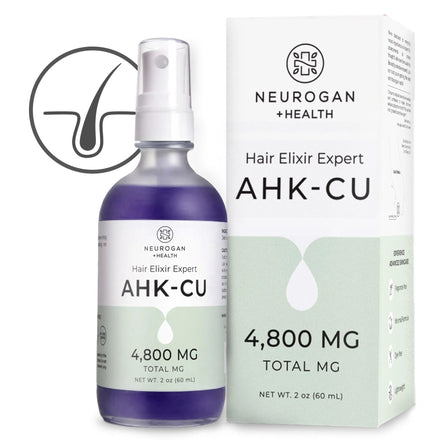
For hair, the most targeted copper peptide is AHK-Cu (copper tripeptide-3), a synthetic analog designed specifically for follicle stimulation. Research from Seoul National University found that it produces statistically significant dermal papilla cell proliferation and follicle elongation in cultured human follicles [2].
The copper ion in both peptides serves as a cofactor for lysyl oxidase, the enzyme that cross-links collagen fibers into stable, load-bearing structures, strengthening the structural integrity of the scalp and the tissue in which follicles sit. AHK-Cu has also been shown in lab studies to encourage VEGF production, which may help support a healthier blood supply for growing hair [2].
What Is PRP Therapy and How Does It Treat Hair Loss?
PRP stands for platelet-rich plasma. It's a concentrated preparation of platelets and growth factors derived from the patient's own blood — what makes it autologous: no foreign substances, no risk of allergic reaction or rejection.
The procedure: a blood sample is drawn and centrifuged to separate components by density. The platelet-rich layer is isolated, resulting in plasma with platelet concentrations roughly three to five times higher than normal. Those platelets carry growth factors including PDGF, TGF-beta, VEGF, EGF, and IGF-1. When injected into the scalp dermis at the level of the hair follicle, these growth factors stimulate cellular activity, activate dormant follicles, extend the anagen phase, and improve vascular supply via VEGF-driven angiogenesis.
PRP requires professional administration in a clinical setting. Sessions typically take 45 to 90 minutes and are usually scheduled in a series of three to six sessions spaced four to six weeks apart, followed by maintenance sessions every three to six months.
Effectiveness and clinical evidence
PRP Evidence
PRP has a growing clinical evidence base for androgenetic alopecia. Randomized controlled trials have shown measurable improvements in hair density, hair count, and hair shaft diameter compared to placebo. A 2017 meta-analysis of five randomized trials found significant gains in hair density and improvements in hair-loss severity scores with PRP compared with controls [3].
PRP doesn't address the underlying cause of androgenetic alopecia — it doesn't block DHT, the hormone that drives follicular miniaturization. Its benefits appear to stem from stimulating follicle activity within the current hormonal environment rather than altering it. This is why many practitioners combine PRP with finasteride or minoxidil.
Copper Peptide Evidence
Copper peptide evidence is smaller but more specifically targeted. In the 2007 lab study, AHK-Cu helped human hair follicles grow longer and boosted dermal papilla cell activity. In a 2016 clinical trial of 45 men, a copper-binding peptide spray led to roughly 50–70 more hairs per square centimeter after six months compared to small gains with placebo [2].
PRP has a stronger, more solid evidence base than copper peptides. The effect sizes documented for PRP in clinical settings are also generally larger than those seen in copper peptide trials.
Cost Comparison
PRP therapy is expensive. A single session typically costs between $500 and $2,000, depending on the clinic and protocol. Initial treatment usually involves three to six sessions, with upfront costs ranging from $1,500 to $12,000. Maintenance sessions every three to six months add ongoing cost. Most health insurance plans don't cover PRP for hair loss. Over five years, total costs can reach $10,000 to $20,000 or more.
Copper peptide scalp serums are significantly more affordable. Quality formulations typically cost $30 to $120 per month. A year of daily use runs $360 to $1,440, with no sessions, no clinic visits, and no needles required.
results timeline
Copper peptides (daily topical): Reduced shedding within 4–8 weeks; early signs of new growth around 2–3 months; visible density changes at 5–6 months of consistent use.
PRP: Most patients begin to notice changes within 3–4 months after completing a treatment series. Peak results typically observed 6–12 months after beginning treatment, with effects that gradually diminish without maintenance sessions.
An important distinction: PRP's results are more pronounced in the initial period but require ongoing maintenance injections to sustain. Copper peptides have lower amplitude but are sustainable indefinitely with daily topical use at a fraction of the cost.
Side Effects and Safety
Copper peptides: No significant side effects have been reported at topical concentrations. Applied to the scalp, they don't enter systemic circulation. No injection-related reactions and no downtime.
PRP: Because PRP uses the patient's own blood, it's considered autologous, making the risk of allergic reaction extremely low. The main side effects are related to the injection process: temporary scalp tenderness, redness, swelling, and mild bruising at injection sites — typically resolving within 24 to 72 hours. More serious complications including infection, nerve injury, or calcification at injection sites are rare.
Can You Combine Copper Peptides and PRP?
Yes, and the combination is a natural fit. Both promote angiogenesis — improving blood vessel formation around follicles — but through different delivery pathways: PRP delivers a concentrated burst of VEGF and other growth factors directly to the dermis via injection, while copper peptides upregulate VEGF production in scalp fibroblasts through ongoing topical application.
For someone already undergoing PRP, adding a daily copper peptide scalp serum between sessions is a low-cost, no-risk way to maintain follicle support in the weeks and months between clinic visits. PRP provides the high-intensity growth factor stimulus at intervals; copper peptides provide consistent daily maintenance in between.
If budget is the deciding factor, copper peptides are the accessible everyday option with a credible mechanism and a very low commitment threshold. If results speed and effect size matter more, and the cost and clinic visits are manageable, PRP has stronger initial evidence. For people who can do both, the combination is mechanistically complementary and practically straightforward.
References
- Pickart, L., Vasquez-Soltero, J. M., & Margolina, A. (2015). GHK peptide as a natural modulator of multiple cellular pathways in skin regeneration. BioMed Research International, 2015, 648108. https://pmc.ncbi.nlm.nih.gov/articles/PMC4508379/
- Pyo, H. K., et al. (2007). The effect of tripeptide-copper complex on human hair growth in vitro. Archives of Pharmacal Research, 30(7), 834–839. https://pubmed.ncbi.nlm.nih.gov/17703734/
- Zhang, X., et al. (2023). Platelet-rich plasma for androgenetic alopecia: a systematic review and meta-analysis of randomized controlled trials. Journal of Cutaneous Medicine and Surgery, 27(5), 504–508. Link
- Gentile, P., & Garcovich, S. (2020). Systematic review of platelet-rich plasma use in androgenetic alopecia compared with Minoxidil, Finasteride, and adult stem cell-based therapy. International Journal of Molecular Sciences, 21(8), 2702. https://pubmed.ncbi.nlm.nih.gov/32295047/