Graphic comparing copper peptides and dutasteride for hair loss treatment, featuring a white capsule on a blue liquid background.
Dutasteride is one of the more aggressive pharmaceutical options for pattern hair loss. Copper peptides are among the more targeted non-hormonal ones.
They don't compete for the same spot in a routine, and they work through processes that barely overlap, which makes this less a head-to-head comparison and more a guide to understanding what each one actually does and who it's suited for.
androgenetic alopecia, the genetically predetermined, hormone-driven form of hair loss that affects roughly 50 percent of men and 30 percent of women by middle age, is the condition to which both compounds are relevant [1].
The difference is that dutasteride targets the hormonal root cause, while copper peptides support the follicle cells that are damaged. That difference defines everything: the side effect profiles, who can use each, and whether they belong in the same routine.
what are copper peptides (GHK-Cu) and How Do They Work for Hair Loss?
Copper peptides are short chains of amino acids bonded to a copper ion.
The most studied member of this class is GHK-Cu, a naturally occurring tripeptide-copper complex composed of glycine, histidine, and lysine bound to a copper(II) ion. It's found naturally in human plasma, saliva, and urine, and was first isolated by Dr. Loren Pickart in 1973 [2]. Its INCI name on product labels is Copper Tripeptide-1.
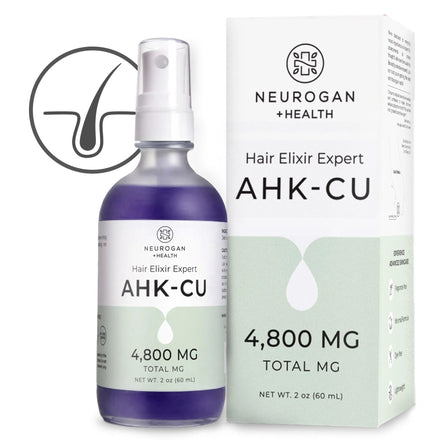
For hair specifically, the copper peptide most targeted at follicle biology is AHK-Cu (Copper Tripeptide-3), a synthetic analog of GHK-Cu with a single amino acid substitution that shifts its affinity toward hair follicle cells.
Research from Seoul National University found that AHK-Cu stimulates dermal papilla cell proliferation, reduces markers of follicle cell apoptosis, and is associated with measurable hair follicle elongation in cultured human follicles [3].
The copper ion in both peptides serves as a cofactor for several biologically important enzymes.
Lysyl oxidase uses copper to cross-link collagen fibers into stable structures. Superoxide dismutase uses copper to neutralize free radicals that would otherwise damage follicle cells and amplify local DHT production (a hormone linked with hair loss). These enzymatic roles are why the copper itself matters, not just the peptide scaffold carrying it.
GHK-Cu also stimulates collagen production in fibroblasts and promotes angiogenesis through VEGF upregulation, improving the blood supply and structural matrix that follicles depend on. Together, GHK-Cu and AHK-Cu address the follicle environment and the follicle cells within it from complementary angles.
What Is Dutasteride and How Does It Treat Hair Loss?
Dutasteride (brand name Avodart) is a 5-alpha reductase inhibitor originally approved by the FDA for benign prostatic hyperplasia, an enlarged prostate condition.
It's used off-label for androgenetic alopecia in many countries and has received regulatory approval for hair loss specifically in South Korea and Japan, though not in the United States. It requires a prescription.
DHT, or dihydrotestosterone, is the androgen hormone responsible for follicle miniaturization, the progressive shrinking of hair follicles that causes hair to become thinner and shorter over time until the follicle becomes dormant.
DHT is produced when testosterone is converted by the enzyme 5-alpha reductase. There are two forms of this enzyme: Type 1, found primarily in skin and the liver, and Type 2, the dominant form in scalp hair follicles.
This is where dutasteride differs from finasteride.
Finasteride selectively blocks Type 2 5-alpha reductase, reducing circulating DHT by approximately 70 percent. Dutasteride blocks both Type 1 and Type 2, reducing DHT by approximately 98 percent [4].
That more complete suppression is why dutasteride tends to produce stronger hair-growth outcomes than finasteride in head-to-head comparisons, but it also comes with higher hormonal risk.
Copper Peptides vs Dutasteride: Mechanism of Action Compared
These two treatments work so differently that comparing them mechanism-by-mechanism is less about deciding which is better and more about understanding what problem each one solves.
| Copper Peptides (GHK-Cu + AHK-Cu) | Dutasteride | |
|---|---|---|
| Primary mechanism | Stimulates dermal papilla cell proliferation; reduces follicle cell apoptosis; supports collagen matrix; upregulates VEGF; reduces oxidative stress via SOD | Blocks both Type 1 and Type 2 5-alpha reductase; reduces DHT systemically by ~98% |
| Where it acts | Locally at the scalp; applied topically | Systemically throughout the body; taken orally |
| Target | Follicle cells and scalp environment | Hormonal pathway (DHT production) |
| Prolongs anagen phase? | Yes, via TGF-beta-1 reduction and DPC stimulation | Indirectly, by protecting follicles from DHT-driven shortening |
| Reduces DHT? | No, does not block 5-alpha reductase or reduce systemic DHT | Yes, ~98% reduction in circulating DHT |
| Hormonal? | Non-hormonal | Systemic hormonal intervention |
| Prescription required? | No | Yes |
The core distinction:
- Dutasteride reduces the supply of DHT that is causing ongoing follicle damage.
- Copper peptides support the follicle cells that DHT has been damaging, without touching the hormonal pathway at all. Neither replaces the other's function.
clinical evidence: How Effective Is Each Treatment?
There's a big gap in this department. After all, dutasteride is a drug, whereas copper peptides are a cosmetic ingredient.
Dutasteride Evidence
Dutasteride's clinical evidence base for hair loss is strong.
A 24-week randomized trial in 917 men with androgenetic alopecia found that dutasteride 0.5 mg/day increased hair counts significantly more than finasteride 1 mg/day, and that both treatments were superior to placebo [5].
Multiple studies have now replicated this finding that dutasteride outperforms finasteride on measurable hair density outcomes.
Copper Peptide Evidence
Evidence for copper peptides is more limited but targeted.
In a 2007 lab study, scientists grew human hair follicles and the dermal papilla cells, or "boss" cells, that control their growth, in dishes. When they added AHK-Cu, the hairs grew longer, and the boss cells divided more. They also saw fewer signs that these cells were preparing to die, suggesting that AHK-Cu helped keep them alive and protected [3].
Side Effects and Safety: Copper Peptides vs Dutasteride
Because dutasteride is a drug, you can expect there to be a higher level of risk compared to copper peptides.
Copper Peptide Side Effects
Copper peptides, applied topically at standard formulation concentrations, have not been associated with significant side effects in published research.
There are no hormonal effects, no sexual side effects, and no systemic changes. The topical application means the compounds act locally at the scalp rather than circulating through the body.
Copper peptide serums typically have a natural blue-green color, which comes from the copper ion itself. It's not a dye and usually doesn't cause any adverse reactions.
That being said, it's still a good idea to patch test a product on your skin before going in with a full scalp application, especially if you have sensitive skin.
Dutasteride Side Effects
Dutasteride has a more significant side-effect profile than finasteride because its more complete DHT suppression affects hormone balance more broadly.
The most commonly reported effects are sexual: reduced libido, erectile dysfunction, and ejaculatory changes.
Gynecomastia (breast tissue development in men) has been reported at a somewhat higher rate with dutasteride than with finasteride.
Dutasteride has a very long half-life of approximately five weeks, meaning it remains active in the body for an extended period after stopping. This is relevant not only for side effect management but for fertility: dutasteride is contraindicated in women of childbearing age and in men who may be trying to conceive, given its effects on DHT-dependent fetal development.
| Side Effect Category | Copper Peptides | Dutasteride |
|---|---|---|
| Sexual side effects | None reported | Reported in ~3–5% in trials; libido, ED, and ejaculatory changes |
| Hormonal disruption | None | Reduces systemic DHT by ~98%; broad hormonal effect |
| Gynecomastia risk | None | Higher than finasteride; reported in trials |
| Post-discontinuation effects | No mechanism; not reported | Long half-life (~5 weeks); effects may persist after stopping |
| Contraindicated in women? | No established contraindication | Yes, contraindicated in women of childbearing age |
| Safe during conception? | No concern | No; avoid if trying to conceive (men and women) |
| Initial shedding phase | Not reported | Not typical with dutasteride |
FDA Approval Status and Regulatory Differences
Copper peptides are cosmetic ingredients, which means they're regulated only as cosmetics in the United States, so they cannot legally be marketed as treatments for hair loss or any medical condition.
The FDA does not evaluate cosmetic ingredients for efficacy before they reach the market.
Product claims must stay within cosmetic language, describing support for hair health, scalp condition, or appearance, rather than claiming to treat, prevent, or cure androgenetic alopecia.
Dutasteride holds FDA approval for benign prostatic hyperplasia (BPH) at 0.5 mg daily, but is not FDA-approved for hair loss in the United States.
It's used off-label for hair loss based on its mechanism and growing clinical evidence.
In South Korea, dutasteride received regulatory approval specifically for androgenetic alopecia, and prescribing for hair loss under physician supervision is standard practice in many countries.
In the US, off-label prescribing by physicians is legal and common in dermatology, but patients should be aware that they are using the drug outside its approved indication.
| Copper Peptides | Dutasteride | |
|---|---|---|
| US regulatory category | Cosmetic ingredient | Prescription drug (FDA-approved for BPH; off-label for hair loss) |
| FDA-approved for hair loss? | No | No (in the US); yes in South Korea and Japan |
| Prescription required? | No | Yes |
| Evaluated for efficacy by FDA? | No (cosmetic) | Yes (for BPH indication) |
| Can claim to treat hair loss? | No | Yes, in countries where approved for this indication |
How to Use Each Compound: Administration and Dosing
These two compounds are used very differently because they work through different mechanisms.
Copper Peptides
Copper peptide scalp serums are applied topically to a clean, dry scalp once or twice daily. Leave-on formulations are generally more effective than rinse-off products because they allow time for the peptide to penetrate through the outer skin layer to the dermis, where follicles are located.
Massaging the serum into the scalp after application helps distribute it and temporarily increases local blood flow.
Keep in mind that copper peptides are sensitive to pH. You should avoid layering them with strongly acidic ingredients, such as vitamin C in ascorbic acid form, which is typically formulated at pH 2.5 to 3.5.
High-concentration AHAs and BHAs should also be applied separately. Results, if they occur, typically take four to six months of consistent daily use to become visible, given the slow pace of hair cycling.
Dutasteride
Dutasteride for hair loss is typically prescribed at 0.5 mg taken orally once daily, the same dose used for BPH.
Some physicians prescribe lower doses (0.1 to 0.5 mg) or alternate-day dosing to reduce the risk of side effects while maintaining meaningful DHT suppression.
Because dutasteride has a half-life of approximately 5 weeks, it takes several months to reach stable blood levels, and several more months for hair-growth effects to become visible. Most clinical studies assess outcomes at 24 weeks, with continued improvement typically observed through 12 to 24 months of use.
Dutasteride should be initiated under physician supervision, with a discussion of the side-effect profile, reproductive considerations, and a monitoring plan.
Can You Combine Copper Peptides and Dutasteride?
Yes, you can combine them. There are no pharmacological interactions between topical copper peptides and oral dutasteride.
They act through completely separate pathways on different biological targets, and using both simultaneously creates no known safety concern.
The combination is also logically complementary.
Dutasteride reduces DHT, leading to ongoing follicle miniaturization. Copper peptides support the dermal papilla cells and scalp environment that miniaturization has been degrading. One addresses the hormonal cause — the other works on the cellular consequences.
A routine that includes both is addressing the problem from two directions simultaneously, which is more complete than either intervention alone.
You can take dutasteride as directed by your physician, and apply a copper peptide scalp serum once or twice daily as part of your topical routine. No special timing coordination between the two is required.
Copper Peptides vs Dutasteride vs Finasteride vs minoxidil
For anyone building on their understanding of the hair-loss treatments, here's how the four commonly discussed options compare across key dimensions.
| Copper Peptides | Dutasteride | Finasteride | Minoxidil | |
|---|---|---|---|---|
| Mechanism | Follicle cell support; collagen; VEGF; SOD | Dual 5-AR inhibition; ~98% DHT reduction | Type 2 5-AR inhibition; ~70% DHT reduction | Vasodilation; anagen extension |
| Regulatory status (US) | Cosmetic | Rx drug; off-label for hair loss | Rx drug; FDA-approved for male hair loss | OTC; FDA-approved for hair loss |
| Evidence strength | Emerging (small trials + cell studies) | Strong (multiple RCTs) | Strong (multiple RCTs) | Strong (multiple RCTs; decades of data) |
| Hormonal effects | None | Significant; systemic DHT reduction | Moderate; systemic DHT reduction | None |
| Sexual side effects | None reported | Reported; ~3–5% in trials | Reported; ~2–4% in trials | Not hormonal; not reported |
| Works for women? | No established limit | No; contraindicated in women of childbearing age | Not approved; contraindicated in childbearing age | Yes; 2% approved for women |
| Prescription required? | No | Yes | Yes | No (topical) |
Which Hair Loss Treatment Is Right for You?
Please take this information as an educational guide only. If you have any concerns about hair loss or your hormone health, it's important you reach out to a medical professional. It's also the only way you can get access to dutasteride.
Consider Dutasteride If:
You are a man with androgenetic alopecia who wants the most potent pharmaceutical DHT suppression available, is comfortable with a prescription hormonal medication and its associated side effect profile, and has discussed the risks and benefits with a physician.
Dutasteride is particularly relevant for people who have tried finasteride with limited results, since the more complete DHT suppression it provides often yields better outcomes for those who don't fully respond to Type 2 inhibition alone.
It's not appropriate for women of childbearing age or for anyone trying to conceive.
Consider Copper Peptides If:
You want a non-hormonal topical that supports follicle health without systemic effects.
This applies to women with pattern hair loss or diffuse thinning, for whom dutasteride is not an option.
It also applies to men who want to support follicle health proactively, who have experienced side effects from DHT blockers, or who prefer to keep their routine hormonal-intervention-free. Copper peptides are also appropriate for anyone already using dutasteride or finasteride who wants to add complementary cellular support to their routine.
Consider Both If:
You are already on dutasteride or finasteride and want to address both the hormonal driver of miniaturization and the cellular health of follicles simultaneously.
The two approaches are genuinely complementary, not redundant, and combining them adds something the other doesn't cover. There are no safety concerns with using both, and for people serious about comprehensive hair health, the combination of a DHT blocker and a copper peptide serum addresses more of the biological picture than either alone.
References
- Ho, C. H., Sood, T., & Zito, P. M. (2024). Androgenetic alopecia. In StatPearls. StatPearls Publishing.
- Pickart, L., Vasquez-Soltero, J. M., & Margolina, A. (2015). GHK peptide as a natural modulator of multiple cellular pathways in skin regeneration. BioMed Research International, 2015(1), 648108.
- Pyo, H. K., Yoo, H. G., Won, C. H., Lee, S. H., Kang, Y. J., Eun, H. C., Cho, K. H., & Kim, K. H. (2007). The effect of tripeptide-copper complex on human hair growth in vitro. Archives of Pharmacal Research, 30(7), 834–839.
- Drake, L., Hordinsky, M., Fiedler, V., Swinehart, J., Unger, W. P., Cotterill, P. C., et al. (1999). The effects of finasteride on scalp skin and serum androgen levels in men with androgenetic alopecia. Journal of the American Academy of Dermatology, 41(4), 550–554.
- Harcha, W. G., Martínez, J. B., Tsai, T. F., Katsuoka, K., Kawashima, M., Tsuboi, R., et al. (2014). A randomized, active- and placebo-controlled study of the efficacy and safety of different doses of dutasteride versus placebo and finasteride in the treatment of male subjects with androgenetic alopecia. Journal of the American Academy of Dermatology, 70(3), 489–498.