Postpartum hair loss is one of the most alarming things that can happen to new mothers — and one of the most misunderstood. Large clumps of hair in the shower, hair on the pillow, suddenly thin sections along the hairline: it feels catastrophic and permanent. It almost never is.
Understanding what's actually happening makes the experience less frightening and helps you make better decisions about what (if anything) to do about it.
What Is Postpartum Hair Loss? Understanding the Causes
During pregnancy, elevated estrogen levels keep hair in the anagen (active growth) phase for longer than usual. Hair that would normally shed doesn't. Many women notice their hair looks thicker and fuller during pregnancy — this is why.After delivery, estrogen drops sharply. The hair follicles that were held in anagen release all at once, transitioning to telogen (resting phase). Three months later, they shed en masse.
This is called postpartum telogen effluvium, and it's a normal physiological event — not a disease, not a sign that something is wrong, and not a permanent condition.
When Does Postpartum Hair Loss Start and How Long Does It Last?
The shedding typically begins two to four months after delivery. It peaks around four to six months postpartum and resolves — for most women — by six to twelve months.The reason it starts when it does: telogen lasts about three months before the hair sheds. Estrogen drops at delivery, follicles shift to telogen, and three months later the shed happens.
Types of Postpartum Hair Loss
| Type | Description | Typical Resolution |
|---|---|---|
| Postpartum telogen effluvium | Diffuse shedding; normal hormonal response | 6-12 months postpartum |
| Hairline thinning | Common at temples and frontal hairline | Usually grows back with rest of TE |
| androgenetic alopecia unmasked | AGA that was masked by pregnancy hormones; becomes visible postpartum | Does not self-resolve; may require treatment |
Will Hair Grow Back After Postpartum Hair Loss?
For the vast majority of women, yes — fully and completely.The follicles are not damaged. They've cycled through telogen and will re-enter anagen. The regrowth typically appears as short "baby hairs" along the hairline, particularly noticeable 3-6 months after the peak of shedding.
The cases where hair doesn't fully recover are those where another condition was unmasked — most commonly androgenetic alopecia or a nutritional deficiency that developed during or after pregnancy.
Can Copper Peptides Help Postpartum Hair Loss?
The Role of AHK-Cu
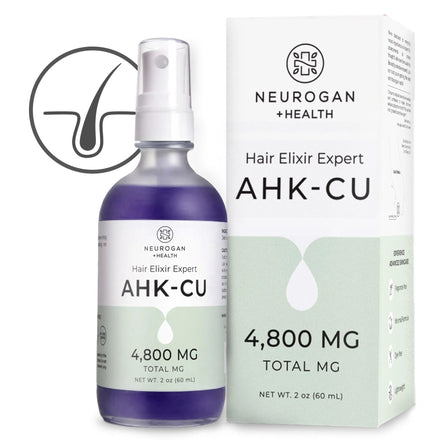
AHK-Cu (Copper Tripeptide-3) targets dermal papilla cells — the cells at the base of the follicle that control hair growth cycling [1]. It helps keep follicles in the anagen phase by reducing TGF-beta-1, a key trigger for the catagen transition.For postpartum telogen effluvium specifically, the practical effect is:
- Supporting follicles as they attempt to re-enter anagen
- Reducing the duration of the telogen phase
- Improving the scalp tissue environment through VEGF and collagen effects
Because postpartum TE is fundamentally a self-limiting condition, AHK-Cu functions as supportive treatment — it may help things recover a bit faster and support the scalp environment during the transition, rather than reversing the underlying cause.
The Role of GHK-Cu
GHK-Cu (copper tripeptide-1) supports collagen synthesis in the scalp dermis, reduces inflammation, and has antioxidant properties [2]. The postpartum period places significant demands on the body — a depleted nutritional state and hormonal volatility can affect scalp tissue quality as well as hair cycling. GHK-Cu supports the structural environment.is AHK-Cu safe During Breastfeeding?
This is the appropriate question for postpartum women to ask, and the honest answer is: it has not been specifically studied in breastfeeding women. Topical copper peptides are applied to the scalp, not consumed. Systemic absorption of topical cosmetic-grade copper peptides is expected to be low.The general guidance in dermatology for topical cosmetics during breastfeeding is to consult your healthcare provider. The ingredient's low-risk profile makes it a reasonable conversation to have.
AHK-Cu is not a DHT blocker (no finasteride concerns), is not retinol (no retinoid concerns), and is not a high-potency chemical exfoliant. From a chemical category perspective, it's among the lower-concern topicals.
When to See a Dermatologist for Postpartum Hair Loss
| Situation | What to Do |
|---|---|
| Diffuse shedding beginning 2-4 months after delivery | Normal postpartum TE; monitor |
| Shedding not resolving by 12 months postpartum | Consider dermatologist referral; may be AGA or ongoing TE |
| Patchy or asymmetric hair loss | Dermatologist; may be alopecia areata |
| hairline recession that doesn't regrow | May be unmasked AGA; dermatologist evaluation appropriate |
| Scalp symptoms (itching, burning, scaling) | Rule out seborrheic dermatitis or scarring alopecia |
Practical Steps During Postpartum Recovery
1. Confirm Normal Levels First
Thyroid dysfunction (postpartum thyroiditis) affects about 5% of women postpartum and causes hair loss. Iron deficiency anemia is common postpartum and impairs hair growth. Before attributing all hair loss to normal telogen effluvium, it's worth having a blood panel done.2. Prioritize Nutrition
Hair requires protein, iron, zinc, biotin, and vitamin D. Postpartum women are often nutritionally depleted, especially if breastfeeding. Continuing a prenatal vitamin postpartum is reasonable. If iron is low, supplementation under medical guidance can significantly impact hair recovery.3. Gentle Hair Handling
Avoid tight hairstyles, heat styling, and excessive brushing during the peak shedding phase. These don't cause the TE, but they can accelerate breakage and add to visible loss.4. AHK-Cu Scalp Serum (Optional)
Apply to the affected areas once to twice daily. Massage in gently. Leave on. Use for at least three to six months to assess benefit.5. Minoxidil (If Appropriate)
If a dermatologist suspects the postpartum loss has unmasked underlying AGA, minoxidil is the first-line option. There are additional considerations about minoxidil during breastfeeding — this is a conversation for your dermatologist.Realistic Expectations for Copper Peptide Use Postpartum
Postpartum TE will resolve on its own for most women. Adding copper peptides is a low-risk supportive measure that may:- Slightly shorten the recovery timeline
- Improve the scalp's condition during the recovery
- Provide benefit if there is underlying AGA contributing
It will not:
- Stop the normal TE process (hormonal reset takes time regardless)
- Produce results in weeks
- Replace medical evaluation if the hair loss is severe, persistent, or patchy
Summary
Postpartum hair loss is overwhelmingly a normal, self-limiting process driven by hormonal changes after delivery. Copper peptide scalp serums — particularly AHK-Cu for follicle support and GHK-Cu for scalp tissue health — are a safe, low-risk option to support recovery. They don't treat the underlying hormonal cause, but they support the follicle environment during the recovery period.If hair loss is severe, persistent beyond twelve months, or patchy, see a dermatologist.
References
- Pyo, H. K., et al. (2007). The effect of tripeptide-copper complex on human hair growth in vitro. Archives of pharmacal research, 30(7), 834-839.
- Pickart, L., et al. (2012). The human tripeptide GHK-Cu in prevention of oxidative stress and degenerative conditions of aging. Oxidative medicine and cellular longevity, 2012(1), 324832.