The copper peptide product market has grown considerably, and with that growth has come a lot of noise. Some products prominently list copper peptides on the label, yet include them at concentrations too low to have any effect. Others mix them with ingredients that degrade the active before it ever reaches your scalp. A smaller number are genuinely well-formulated.
So, what should you actually spend your money on?
This guide covers how copper peptides work for hair loss, what separates good formulations from marketing-heavy ones, which product formats actually deliver the active to the follicle, how they compare to minoxidil, and what results look like over time. It also covers which types of hair loss they're most relevant for and how to layer them with other treatments.
what are copper peptides (GHK-Cu) and How Do They Work for Hair Loss?
Copper peptides are short chains of amino acids bonded to a copper ion. GHK-Cu, or glycyl-L-histidyl-L-lysine copper complex, is a naturally occurring tripeptide discovered in 1973 by Loren Pickart, found in human plasma, saliva, and urine [1]. Its levels decline with age, dropping from around 200 ng/mL in early adulthood to roughly 80 ng/mL by the 60s, which tracks with the loss in skin collagen density and hair quality seen over the same period [2].AHK-Cu (Copper Tripeptide-3) is a synthetic analog engineered specifically for hair follicle stimulation. It stands out from GHK-Cu by one amino acid at position 1, a change that appears to shift its affinity toward follicle tissue rather than the broader tissue-repair profile of GHK-Cu.
GHK-Cu helps build the scalp's support structure, while AHK-Cu works directly on the follicle's "control center" cells.
How We Chose the Best Copper Peptide Products for Hair Loss
Every product in this list was evaluated against the same criteria:- Active ingredient transparency: The INCI names copper tripeptide-1 (GHK-Cu) and/or Copper Tripeptide-3 (AHK-Cu) must appear in the ingredient list, not just in marketing language.
- Ingredient list position: Copper peptides appearing in the first half of the ingredient list indicate meaningful concentrations.
- Formulation pH: The copper-peptide bond is stable at pH 4-7.
- Delivery format: Leave-on scalp serums are the best format.
- No incompatible co-actives: Ascorbic acid, high-concentration AHAs, and retinoids in the same formula as copper peptides raise stability concerns.
- Honest claims: Products that promise results in days, claim to 'cure' hair loss, or make hormonal claims are red flags.
Best Copper Peptide Serums for Hair Growth [2026]
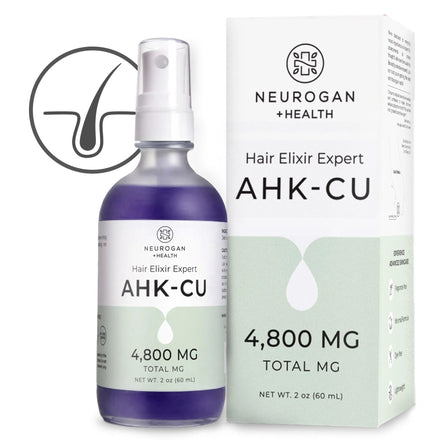
Best Dual-Peptide Formula: Neurogan Health Copper Peptide Scalp Serum (GHK-Cu + AHK-Cu)
Neurogan Health's copper peptide scalp serum is made with both Copper Tripeptide-1 (GHK-Cu) and Copper Tripeptide-3 (AHK-Cu) in a leave-on formula designed specifically for scalp application.The dual-peptide approach addresses the full picture: GHK-Cu supports scalp tissue repair, collagen maintenance, and anti-inflammatory activity, while AHK-Cu directly targets dermal papilla cell stimulation and anagen extension.
- Who it's best for: People wanting a single serum that covers both the scalp environment (GHK-Cu) and follicle cell stimulation (AHK-Cu) without needing to layer two separate products.
- What to be realistic about: Like all copper peptide products, visible density changes take four to six months of consistent use.
Best for scalp repair Focus: The Ordinary Multi-Peptide Serum for Hair Density
The Ordinary's hair density serum contains a range of peptides, including biotinoyl Tripeptide-1, alongside other actives that target hair follicle and scalp health. It's one of the more affordable options in the category.It doesn't contain GHK-Cu or AHK-Cu specifically, so it doesn't include the copper peptide mechanisms covered in this article. For people specifically seeking copper tripeptide activity at the follicle level, this is a complementary option rather than a direct equivalent.
- Who it's best for: People beginning a hair health routine who want a well-formulated, affordable peptide serum as a starting point.
Best High-Concentration GHK-Cu: NIOD Copper Amino Isolate Serum 1:1
NIOD's Copper Amino Isolate Serum contains a high concentration of copper amino acid isolate including GHK-Cu. Some users have adapted it for scalp use, given the documented collagen and anti-inflammatory mechanisms of GHK-Cu in scalp tissue.- Who it's best for: People who already have a follicle-targeted routine (minoxidil, AHK-Cu serum) and want to add a dedicated scalp tissue repair layer.
Best for microneedling Protocols: Clinical-Grade Copper Peptide Serums
Several clinical-grade serums are formulated specifically for post-microneedling application on the scalp, taking advantage of the temporary micro-channels that needling creates to deliver copper peptides into the dermis at higher concentrations.| Product | Key Actives | Best For | Price Range | Format |
|---|---|---|---|---|
| Neurogan Health Copper Peptide Serum | Copper Tripeptide-1 (GHK-Cu) + Copper Tripeptide-3 (AHK-Cu) | Comprehensive dual-mechanism follicle and scalp support | $$ | Leave-on scalp serum |
| The Ordinary Multi-Peptide Hair Density | Biotinoyl Tripeptide-1, Acetyl Tetrapeptide-3 | Entry-level peptide scalp support | $ | Leave-on serum |
| NIOD Copper Amino Isolate 1:1 | High-concentration copper amino isolate including GHK-Cu | Scalp tissue repair; collagen support | $$$ | Leave-on (adapted for scalp) |
| Clinical-grade microneedling serums | Varies; copper peptides as primary active | Post-microneedling scalp penetration protocols | $$-$$$ | Leave-on; clinic setting |
Copper Peptides vs Minoxidil: How They Compare
| Factor | Copper Peptides | Minoxidil |
|---|---|---|
| Primary mechanism | Follicle cell stimulation; collagen support; VEGF; anti-inflammatory; SOD antioxidant | Vasodilation; anagen extension via potassium channel activity |
| FDA approval | No (cosmetic) | Yes (OTC topical; 2% for women, 2% and 5% for men) |
| clinical evidence | Small trials + cell studies; promising but early | Decades of large randomized controlled trials |
| Stops working when you stop? | Benefits diminish gradually; no sharp rebound | Hair loss returns within months of stopping |
| Initial shedding | Not reported | Possible in the first 4-8 weeks |
| Side effects | Minimal at topical doses | Scalp irritation possible; rare systemic effects |
| Monthly cost | $30-$120 | $10-$40 (generic) |
| Best used with each other? | Yes | Yes |
Minoxidil has a stronger evidence base. For anyone starting hair loss treatment from zero, minoxidil is the appropriate first step. Copper peptides add something minoxidil doesn't: direct follicle cell stimulation, collagen support, and antioxidant protection.
How to Use Copper Peptide Products for Maximum Results
Apply to a clean, dry scalp. After washing and towel-drying, apply the serum in sections and massage it in with fingertips. Once- or twice-daily application is standard. Consistency over months matters far more than frequency within a day.Keep copper peptides separate from ascorbic acid, high-concentration AHAs, or retinoids. If using minoxidil, allow it to dry completely before applying a copper peptide serum.
Can You Combine Copper Peptides with finasteride or Minoxidil?
Yes. There are no pharmacological interactions between topical copper peptides and either finasteride or minoxidil. The combination addresses the problem from multiple angles: finasteride reduces systemic DHT by about 70 percent, minoxidil widens blood vessels to improve scalp blood flow, and copper peptides support follicle cells directly and promote new blood vessels through VEGF upregulation.What Results to Expect and How Long They Take
| Timeline | What May Happen |
|---|---|
| 4-8 weeks | Reduced daily shedding; improved scalp condition |
| 2-3 months | New fine hairs in areas of previous thinning |
| 4-6 months | Visible density improvement |
| 6+ months | Most significant changes; full assessment appropriate |
Side Effects and Safety Considerations
Copper peptides have an excellent safety profile at cosmetic formulation concentrations. No significant adverse effects have been reported in published research on GHK-Cu or AHK-Cu at topical scalp doses. No hormonal effects. No systemic changes.Patch test before full scalp application if you have sensitive skin or known metal sensitivities.
The Bottom Line
The best copper peptide products for hair loss in 2026 are those that name their actives by INCI, position them higher up in the formula list, deliver them in a leave-on format at a stable pH, and make honest claims about what they can do.None of these replace finasteride or minoxidil if you have significant androgenetic alopecia. They add something those treatments don't cover. Used consistently, alongside other evidence-based approaches and with realistic expectations about timeline, copper peptide serums are worth including in a serious hair health routine.
References
- Pickart, L., & Thaler, M. M. (1973). Tripeptide in human serum which prolongs survival of normal liver cells and stimulates growth in neoplastic liver. Nature: New biology, 243(124), 85-87.
- Dou, Y., Lee, A., Zhu, L., Morton, J., & Ladiges, W. (2020). The potential of GHK as an anti-aging peptide. Aging pathobiology and therapeutics, 2(1), 58.