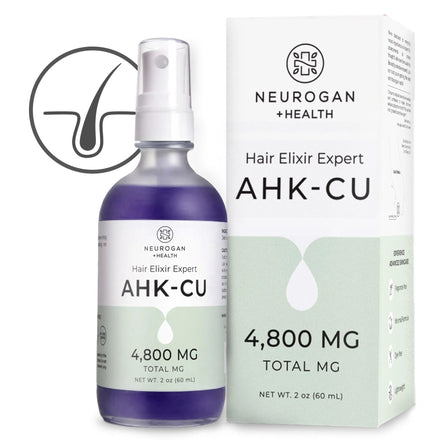
Copper peptides show up on ingredient lists for both skin and hair products, often with the same INCI name (copper tripeptide-1 or Copper Tripeptide-3) and similar claims. But the science behind them and the reasons they work for both skin and hair are worth understanding beyond the label.
What Is Copper and Why Does It Matter in Biology?
Copper is an essential trace mineral. The human body contains approximately 100-150mg of copper, mostly in the liver, brain, heart, kidneys, and muscles. It's not stored in large amounts, so regular dietary intake is necessary. Copper's biological roles:- Enzyme cofactor: Copper is essential for the function of numerous enzymes, including cytochrome c oxidase (mitochondrial energy production), superoxide dismutase (antioxidant defense), and lysyl oxidase (collagen and elastin crosslinking).
- collagen synthesis: Lysyl oxidase (a copper-dependent enzyme) crosslinks collagen and elastin fibers, giving them tensile strength. Without adequate copper, newly synthesized collagen is structurally weak.
- Melanin synthesis: Tyrosinase, the enzyme that synthesizes melanin (hair and skin pigment), requires copper. Copper deficiency can cause premature graying.
- Iron metabolism: Ceruloplasmin, a copper-containing protein, is essential for iron absorption and transport.
- Angiogenesis: Copper is required for VEGF-driven capillary formation.
What Are Copper Peptides?
A copper peptide is a short amino acid chain (peptide) chelated to a copper ion. The peptide serves as a carrier: it guides copper to specific receptors or tissues and delivers it in a bioavailable form. Free copper ions (Cu2+) are not the same as copper peptides — free copper can generate reactive oxygen species via Fenton-type chemistry, while chelated copper delivered via a peptide carrier is directed to constructive pathways. The two copper peptides most relevant to skin and hair:- GHK-Cu (Copper Tripeptide-1): Glycyl-L-Histidyl-L-Lysine copper. Naturally occurring in human plasma. Studied since 1973. Age-related plasma levels decline.
- AHK-Cu (Copper Tripeptide-3): Alanyl-L-Histidyl-L-Lysine copper. Synthetic. Designed for hair follicle targeting.
How Copper Peptides Support Skin Health
Collagen Synthesis
GHK-Cu upregulates collagen type 1, 3, and 4 production in dermal fibroblasts [1]. It also inhibits MMP-1 (collagenase), reducing collagen degradation. The result is a net increase in dermal collagen density.clinical studies have shown measurable increases in collagen and elastin content in skin biopsies after 12 weeks of topical GHK-Cu application.
Wound Healing
GHK-Cu was first characterized in the context of wound healing. It accelerates cell migration, epithelialization, and the formation of granulation tissue. It also reduces excessive scar formation by modulating TGF-beta signaling.Antioxidant Protection
GHK-Cu induces the expression of superoxide dismutase (SOD) and catalase — two primary antioxidant enzymes that neutralize reactive oxygen species. This protects dermal fibroblasts and keratinocytes from oxidative damage.Anti-Inflammatory
GHK-Cu reduces pro-inflammatory cytokines including TNF-alpha and IL-6. Chronic low-grade inflammation in skin accelerates aging and weakens the barrier.Gene Regulation
The gene regulatory effect of GHK-Cu is its most striking mechanistic feature. It activates over 4,000 genes related to repair and regeneration while suppressing genes related to inflammation and cellular stress [2].How Copper Peptides Support Hair Health
Follicle Cell Stimulation (AHK-Cu)
AHK-Cu targets dermal papilla cells, the specialized cells at the base of the follicle that control hair growth cycling. In human follicle cultures, AHK-Cu produced statistically significant follicle elongation and DP cell proliferation [3].Anagen Extension
Both GHK-Cu and AHK-Cu suppress TGF-beta-1, a key signal that triggers the transition from active growth (anagen) to regression (catagen). Reducing this signal helps keep follicles in the growth phase longer.Scalp Vascularization
VEGF upregulation by both peptides promotes new capillary formation around the follicle. Reduced blood flow to follicles is a feature of both aging-related thinning and androgenetic alopecia.Scalp Collagen
The scalp's dermis provides the structural medium in which follicles are embedded. Maintaining collagen density supports the mechanical and nutritional environment of the follicle.Melanin Support
Copper is required for melanin production. This is less directly related to growth, but copper peptides may offer marginal support for hair pigmentation via the tyrosinase pathway.Why Levels Decline With Age and What That Means
GHK-Cu plasma concentrations drop from approximately 200 ng/mL in young adults to approximately 80 ng/mL by the 60s [4]. This decline tracks with:- Declining skin collagen density (~1% per year after the mid-20s)
- Slower wound healing
- Reduced antioxidant capacity
- Progressive hair thinning and graying
Whether supplementing topical GHK-Cu can meaningfully offset this systemic decline is the key question. The studies suggest meaningful effects at the site of application, but this is local supplementation, not a reversal of systemic age-related decline.
Copper Peptides vs. Free Copper Supplements
Some hair supplements contain copper (often as copper gluconate or copper citrate). This is not the same as a copper peptide.| Dietary Copper Supplements | Copper Peptides (Topical) | |
|---|---|---|
| Delivery method | Oral | Topical (scalp/skin) |
| Form | Free copper ions or mineral chelates | Copper bound to peptide carrier |
| Primary function | Systemic copper status | Local tissue delivery and receptor-specific signaling |
| Risk of excess | Potential toxicity at high doses | Negligible at cosmetic concentrations |
| Evidence for hair | Deficiency correction | Follicle stimulation, VEGF, collagen |
Dietary copper supplementation is appropriate only for documented deficiency. Copper peptide serums work through a different mechanism entirely — the peptide carrier is doing as much work as the copper ion.
Safety: What You Need to Know
At cosmetic formulation concentrations, copper peptides are among the safest active ingredients in use. No systemic effects from topical application. No hormonal effects. No significant irritation in the clinical literature.The one relevant concern is copper loading in rare conditions like Wilson's disease (a genetic disorder affecting copper metabolism). People with Wilson's disease should not use copper peptide topicals without medical guidance.
pH sensitivity: The copper-peptide bond is stable at pH 4-7 and degrades in strongly acidic environments (pH below ~3.5). Avoid using copper peptide serums with high-concentration ascorbic acid vitamin C in the same application step.How to Use Copper Peptide Products
Leave-on serums or sprays applied to clean skin or scalp are the most effective format. Cleanse first, apply the serum to the target area, massage in, and leave on. Rinse-off formats (shampoos, conditioners) are unlikely to provide meaningful benefit — contact time is too brief.Apply daily or twice daily. The evaluation window for hair is six months.
References
- Pickart, L., et al. (2012). The human tripeptide GHK-Cu in prevention of oxidative stress and degenerative conditions of aging. Oxidative medicine and cellular longevity, 2012(1), 324832.
- Pickart, L., & Margolina, A. (2018). Regenerative and protective actions of the GHK-Cu peptide in the light of the new gene data. International journal of molecular sciences, 19(7), 1987.
- Pyo, H. K., et al. (2007). The effect of tripeptide-copper complex on human hair growth in vitro. Archives of pharmacal research, 30(7), 834-839.
- Dou, Y., Lee, A., Zhu, L., Morton, J., & Ladiges, W. (2020). The potential of GHK as an anti-aging peptide. Aging pathobiology and therapeutics, 2(1), 58.