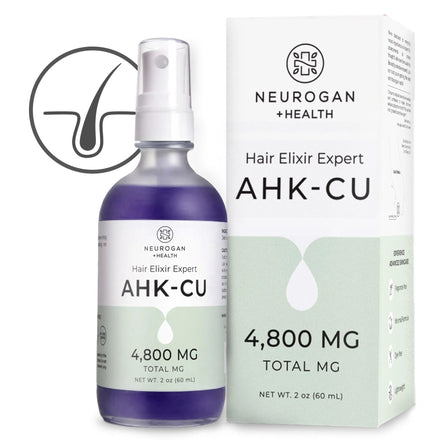
Short answer: no. There is no published human study of injected AHK-Cu, no established injection dose, and no safety data for putting it under the skin. Every piece of evidence behind AHK-Cu for hair comes from the peptide being applied to follicle tissue directly, which is why the studied route, and the only route we sell, is a topical AHK-Cu scalp serum.
That does not stop "AHK-Cu injection dosage" and "AHK-Cu peptide injection protocol" from being searched hundreds of times a month. The rest of this article explains where those protocols come from, what the research actually tested, and what a sensible protocol looks like if you want the studied effect rather than an experiment on yourself.
What the AHK-Cu research actually tested
The foundational AHK-Cu paper is Pyo and colleagues, 2007, published in Archives of Pharmacal Research. The team exposed cultured human dermal papilla cells and whole hair follicles to AHK-Cu and measured two things: proliferation of the papilla cells, and elongation of the follicle shaft. Both increased, and the authors linked the effect to higher VEGF output and lower apoptosis (programmed cell death) in the papilla.1
Two details matter for the injection question:
- It was an in-vitro study. Cells and follicles in a dish, bathed in a solution. Nobody injected anything into anyone.
- The target sits where a topical can reach it. The dermal papilla lives at the base of the follicle in the dermis, a few millimetres down. A solution applied to the scalp reaches it through the follicular opening, which is the route every topical hair treatment, including minoxidil, relies on.
A PubMed search for AHK-Cu combined with "injection", "subcutaneous" or "intradermal" returns nothing. The full list of AHK-Cu studies is short, and none of them involve a needle.
Where the injection "protocols" come from
The dosing numbers circulating online, typically 50 to 200 micrograms per injection, a few times a week, are not from AHK-Cu research. They are copied across from the broader peptide-forum culture, where compounds like BPC-157 or GHK-Cu are sold as lyophilised powder "for research use", reconstituted with bacteriostatic water, and self-injected. Vendors list AHK-Cu in the same format, so the same dosing template gets attached to it.
Three problems with borrowing that template:
- It is a different molecule. AHK-Cu (copper tripeptide-3) and GHK-Cu (copper tripeptide-1) differ by one amino acid, and the GHK literature, including the wound-healing work and the one human hair trial (which used a 5-ALA + GHK peptide complex, not AHK-Cu), does not transfer. We cover the difference in GHK-Cu vs AHK-Cu.
- There is no pharmacokinetic data. Nobody has measured how long injected AHK-Cu stays active, where it distributes, or how much copper load it adds systemically. A dose with no data behind it is a guess, not a protocol.
- "Research use only" powder is not a sterile pharmaceutical. Purity, endotoxin levels and sterility are whatever the vendor's certificate says, if there is one. Injecting it bypasses every barrier your body has against contamination.
Is it a drug? The regulatory picture
Applied to the scalp, AHK-Cu is a cosmetic ingredient with an INCI name (Copper Tripeptide-3) and a long history of use in hair tonics at low concentrations. Injected, the same peptide would be an unapproved drug. There is no FDA-approved injectable AHK-Cu product anywhere, and the peptide has never been through the clinical trials that would establish an injectable dose or safety profile. Anyone selling "injectable AHK-Cu" is selling raw research chemical, not a medicine. We explain the topical safety picture in detail in Is AHK-Cu safe?
The protocol that matches the evidence
If the goal is the effect shown in the research, proliferating dermal papilla cells and a longer growth phase, the delivery method is the scalp surface, applied consistently.
| Step | What to do | Why |
|---|---|---|
| Dose | 6 to 8 sprays of a 4,800 mg / 60 mL serum (roughly 0.5 mL) to the thinning areas, once daily | Delivers AHK-Cu and GHK-Cu at the concentration range used in cosmetic formulations, directly over the follicles that need it |
| Timing | Same time each day; evening if you use vitamin C in the morning | Consistency drives results; copper peptides and ascorbic acid interfere with each other (details) |
| Enhancement | Optional microneedling once a week, serum applied after | Microchannels increase penetration to the papilla depth without a needle into tissue (protocol) |
| Duration | Judge at 12 weeks minimum | Hair cycles are slow; shedding reduction appears first, density later (timeline) |
Full application steps are in how to use AHK-Cu hair spray, and the complete daily structure is in the scalp care routine.
Frequently asked
Can AHK-Cu be taken orally?
There is no research on oral AHK-Cu either. Peptides are broken down by digestive enzymes, so oral dosing would be unlikely to deliver an intact tripeptide to the scalp.
What about AHK-Cu powder? Can I make my own serum?
You can buy the raw powder, but you then take on the purity testing, the dissolution, the pH and the preservation yourself, and you will not know the concentration you ended up with. A finished serum with a third-party certificate of analysis removes that uncertainty.
Is microneedling the same as injecting?
No. Microneedling creates temporary channels in the outer skin so a topical penetrates deeper; nothing is deposited into tissue by the needle. It is the evidence-adjacent way to improve delivery, and it works with a serum, not a syringe.
Does a higher dose work faster?
Nothing in the literature suggests a dose-response above the cosmetic range, and copper in excess is pro-oxidant. Daily application at the labelled dose is the protocol.
References
- Pyo HK, Yoo HG, Won CH, et al. The effect of tripeptide-copper complex on human hair growth in vitro. Arch Pharm Res. 2007;30(7):834-839. PMID: 17703734.
- Pickart L. The human tri-peptide GHK and tissue remodeling. J Biomater Sci Polym Ed. 2008;19(8):969-988. PMID: 18644225.
- Lee WJ, et al. Efficacy of a complex of 5-aminolevulinic acid and glycyl-histidyl-lysine peptide on hair growth. Ann Dermatol. 2016;28(4):438-443. PMID: 27489425.
This article is educational and is not medical advice. AHK-Cu is a cosmetic topical ingredient; it is not approved as a drug by any route. Talk to a clinician before starting any hair loss treatment.