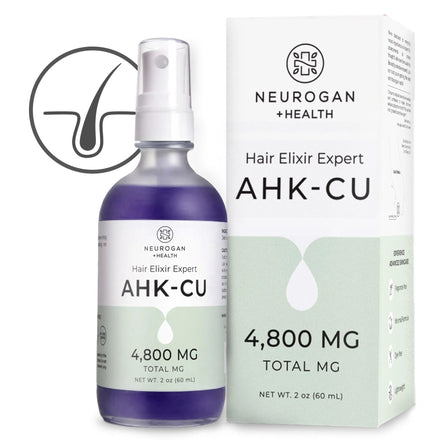
It's not that morning vs. night applications really matter. It's that copper peptides conflict with a specific ingredient many people use in the morning, forcing a decision about when to use it.
Nighttime is generally the better default for copper peptides because most people use vitamin C in the mornings. If you have enough time in the morning to space out their applications, you can use them both in your morning routine too.
what are copper peptides (GHK-Cu) and Why Does Timing Matter?
Copper peptides are naturally occurring protein fragments bound to copper ions. The most studied version is GHK-Cu (copper tripeptide-1), first isolated from human plasma by Dr. Loren Pickart in 1973 [1].Timing matters for copper peptides not because of the ingredient itself, but because of the pH sensitivity of the copper-peptide bond. That bond is stable at roughly pH 4 to 7. In a strongly acidic environment, the bond degrades, releasing free copper ions that are no longer in their bioavailable peptide-bound form.
Why You Should Avoid Copper Peptides with Vitamin C Together
Vitamin C in ascorbic acid form is typically formulated at pH 2.5 to 3.5 — well below the copper peptide stability window. Apply them in the same step, and you're likely degrading one or both.There's also a secondary consideration. Skin has a circadian rhythm. Daytime is mostly about protecting the barrier from UV and pollution, while nighttime is when cell renewal, DNA repair, and rebuilding work peak [2]. Copper peptides arguably align more closely with what the skin is already doing during the nighttime repair window.
Should You Apply Copper Peptides in the Morning or at Night?
Evening is the better default for most people for two reasons:- It avoids the vitamin C conflict
- It aligns with the skin's repair-oriented overnight cycle.
| Morning | Evening | |
|---|---|---|
| Works if no ascorbic acid in routine? | Yes | Yes |
| Conflicts with vitamin C (ascorbic acid)? | Yes, if used in the same step | Avoid in the same step |
| Aligns with the circadian repair cycle? | No (protection phase) | Yes (repair phase) |
| Recommended for most people? | If no vitamin C conflict | Default recommendation |
How Copper Peptides Fit Into Your Morning Skincare Routine
When Morning Works for Copper Peptides
If your morning routine doesn't include ascorbic acid vitamin C (you use a derivative like sodium ascorbyl phosphate or ascorbyl glucoside instead, which are formulated at a higher pH), copper peptides are compatible.If You Use Ascorbic Acid in the Morning
Apply vitamin C first, wait 20 to 30 minutes for the skin surface pH to normalize, then apply the copper peptide serum. Alternatively, move copper peptides to the evening entirely.How Copper Peptides Fit Into Your Nighttime Skincare Routine
Evening is when copper peptides have the least scheduling friction and the most biological support. The main evening scheduling question is how copper peptides interact with retinol or other retinoids, which are also typically used at night.The Copper Peptide and Retinol Question
Retinol is not acidic in the same way vitamin C is, so there's no direct pH degradation to worry about. The pragmatic approach is to apply copper peptides first, let them absorb for a few minutes, then apply retinol. Or alternate nights.How to Manage the Conflict
The best solution for most routines is a straightforward AM/PM split: vitamin C (ascorbic acid) in the morning, copper peptides in the evening.How to Layer Copper Peptides With Retinol and Other Actives
With Retinol and Retinoids
Copper peptides first, retinol after absorption. Or alternate nights.With Hyaluronic Acid
Hyaluronic acid and copper peptides are compatible. Apply hyaluronic acid before the copper peptide serum, while the skin is still slightly damp.With Niacinamide
Niacinamide is one of the most copper-peptide-compatible actives. No pH conflict, complementary anti-inflammatory properties.With AHAs and BHAs
Apply copper peptides in a separate step, ideally after a time buffer. For gentle concentrations used occasionally, the impact may be minimal.With SPF
Copper peptides are compatible with sunscreen. If using copper peptides in the morning, apply them before SPF.Step-by-Step: The Ideal Copper Peptide Layering Order
Morning Routine (Without Ascorbic Acid Vitamin C)
| Step | Product Type | Notes |
|---|---|---|
| 1 | Cleanser | Gentle; sulfate-free preferred |
| 2 | Toner or hydrating mist (optional) | Apply while skin is still slightly damp |
| 3 | Hyaluronic acid serum | On damp skin for best hydration effect |
| 4 | Copper peptide serum | Pat or press into skin |
| 5 | Niacinamide (if used) | Compatible in same step or after |
| 6 | Moisturizer | Seal in the layers |
| 7 | SPF (non-negotiable) | Last step every morning |
Evening Routine (Recommended Default)
| Step | Product Type | Notes |
|---|---|---|
| 1 | Cleanser | Double cleanse if wearing SPF or makeup |
| 2 | Toner or hydrating prep (optional) | While skin is damp |
| 3 | Hyaluronic acid serum | On damp skin |
| 4 | Copper peptide serum | Core evening active — leave on to absorb |
| 5 | Niacinamide (if used) | Compatible, apply after copper peptides |
| 6 | Retinol (if used) | Apply after copper peptides have absorbed, or alternate nights |
| 7 | Moisturizer | Seal in everything |
The Practical Takeaway
The timing question for copper peptides comes down to one variable: whether you use ascorbic acid vitamin C. If you do, put copper peptides in the evening. If you don't, morning or evening both work.The most important thing is consistency over months, not perfect scheduling on any given day.
Frequently Asked Questions
Can I use copper peptides morning and night?
Yes, if your routine doesn't include ascorbic acid in either step. Most people find once daily is sufficient.What happens if I accidentally use copper peptides with vitamin C?
One accidental overlap is unlikely to cause harm. It may reduce the effectiveness of one or both products in that session.Can I use copper peptides every day?
Yes. Copper peptides are designed for consistent daily use. Their benefits compound over months.References
- Pickart, L., & Thaler, M. M. (1973). Tripeptide in human serum which prolongs survival of normal liver cells and stimulates growth in neoplastic liver. Nature: New biology, 243(124), 85-87.
- Draelos, Z. D., et al. (2020). Clinical Benefits of Circadian-based Antioxidant Protection and Repair. Journal of Drugs in Dermatology, 19(12), 1209-1214.